Finding the Right Mentor in Automotive
What to Look For, What to Avoid, and Why It Changes Everything
Behind almost every leader who made it further than they expected is someone who believed in them before they believed in themselves. Someone who challenged them, corrected them, held them accountable, and helped them see what they could become when all they could see was what they weren't. That relationship, when it's healthy, can reshape a career, a family, an entire trajectory.
But mentorship is not automatically healthy. The wrong mentor can stunt growth, create dependency, limit confidence, or keep someone emotionally stuck in a relationship that feels like progress but produces none. And in an industry as fast-moving and relationship-driven as automotive, the difference between the right mentor and the wrong one can define the next decade of your career.
Think about the person who has had the most influence on your career. Did that relationship make you more independent or more dependent? Did it challenge you to grow into yourself, or shape you into someone else's version of success? Did it teach you to stand on your own, or did it quietly teach you that you couldn't? Those questions are the starting point for everything Lou Ramirez and Fred Lennartz want to explore in Austin.
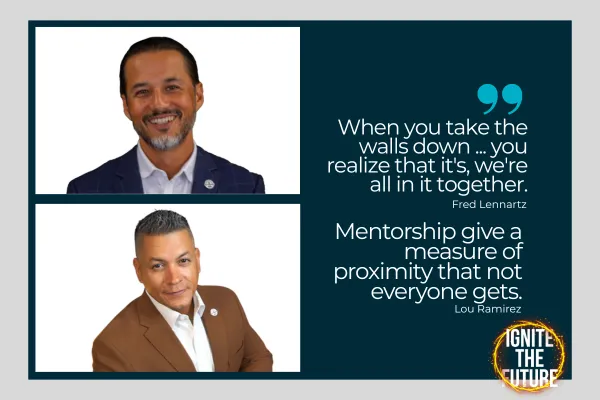
Lou and Fred are the founders of the Car Guy Coffee podcast and Certified Solutionaries training platform. Both are military veterans. Both came up in the same dealership, grew through the industry together, failed together, and eventually built a coaching platform rooted in the belief that leadership development is the most important work happening in automotive. Their Breakout Session at the 2026 Women In Automotive Annual Conference, July 17-20 in Austin, TX, "The Right Mentor Matters: What to Look For (and What to Avoid) in Automotive," is not corporate mentorship theory. It's an honest, relational conversation about the relationships that shape who we become.
Built Through Failure, Not Perfection

Lou and Fred don't present themselves as leaders who figured it out early. They present themselves as leaders who failed enough to learn something worth sharing.
"I've seen him hit walls and get back up and climb the wall the very next day," Fred said of Lou. "He doesn't give up."
They started in the same store, came up through the same industry, and eventually recognized that their dynamic was the foundation for everything they'd build next.
When Mentorship Becomes Personal
For Lou, the need for mentorship didn't start in a dealership. It started as a young father who knew he was empty.
"I knew I was empty. I needed somebody to pour into me," Lou said. "I had to have something to give them. And I knew there was nothing there."
That honesty is the emotional foundation of everything Lou brings to mentorship today. The military and his faith converged at the same time, teaching him to stop performing strength and start building it through surrender and the discipline of letting someone else lead him before he tried to lead anyone else.
That experience shaped a leadership philosophy he carries into every relationship: "I seek connection over compliance," Lou said. The sales manager who learns what motivates each person on the team before assigning their numbers, who connects before commanding, builds a team that performs because they want to, not because they have to.
The Mentor Who Never Really Learns You
Fred's sharpest warning for anyone seeking a mentor is deceptively simple: pay attention to whether they ask you questions.
"If you have a meeting with them, very first meeting, and they don't ask you questions and get to truly know you, and they just give you ideas without even truly figuring out what's wrong," Fred said, "I think you're spinning your wheels."
A mentor who gives advice without understanding who you are, what you're navigating, and what you actually need isn't mentoring. They're projecting their own experience onto yours and hoping it fits. The time you spend following guidance that was never designed for you is time you can't get back.
The best mentors investigate before they prescribe. They ask more than they tell. And they're honest enough to say, "I might not be the right mentor for you, but I know someone who is."
Accountability Is the Difference
When asked what separates a truly impactful mentor from someone who just gives occasional guidance, Fred's answer was one word: "My favorite word: accountability."
Not accountability as punishment. Accountability as care. The kind that shows up in a simple question: did you do what you said you were going to do? And when the answer is no, the kind that doesn't pretend it didn't happen just to avoid discomfort.
"When you teach, you learn twice," he said. The mentor-mentee relationship is a two-way street. The mentor becomes accountable for showing up, for being present, for being worthy of the trust someone placed in them. And the mentee becomes accountable for doing the work, applying the guidance, and being honest about where they're stuck.
The mentors who try to become friends instead of leaders, who avoid the hard conversations because they don't want to make someone uncomfortable, are the ones who produce relationships that feel good but don't produce growth. Comfort and growth rarely live in the same room.
When Mentorship Becomes Dependency
Lou draws a clear line between healthy mentorship and the kind that quietly cripples the person it's supposed to be developing.
"If I can't do without you, then you haven't prepared me," he said. "If you can't go do this without me, then I'm not preparing you properly."
The goal of mentorship is independence, not attachment. A mentor who needs to be needed, who builds a dynamic where the mentee can't function without them, has created dependency, not development. And a mentee who freezes when their mentor isn't in the room has been shaped by a relationship that never taught them to stand on their own.
Lou connects this directly to parenting. The best parents raise children who eventually don't need them for every decision. The best mentors do the same. They build confidence that survives their absence.
Stop Looking for a Perfect Mentor
Fred pushes back hard against a pattern he sees constantly: professionals who refuse guidance from anyone who isn't flawless.
"They seek out a mentor that is perfect, and that will slow you down," he said. The mentor who has failed, learned, and kept going is often the one with the most to teach. Wisdom almost never comes from perfection. It comes from people who survived the consequences and are honest enough to share what they learned.
Why Women in Automotive Need This Conversation
Lou and Fred are direct about the reality women face in dealerships. Young women entering the industry are often walking into environments where they're vastly outnumbered, navigating customer behavior that men rarely experience, and operating without a female mentor who understands their specific challenges.
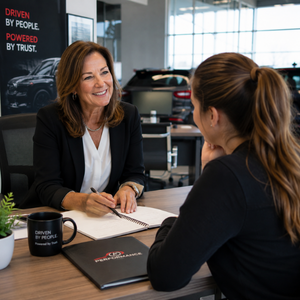
They point to Robin, a 20-plus-year finance manager in Ohio, who has become the mentor that every young woman in her store needs. She's the one who puts a wing around the newer women and speaks to them on every level. She'll tell a new hire she looks like she just rolled out of bed, because a woman can say that to another woman in a way a male manager can't. She'll coach a young saleswoman through handling a customer who crossed a line, because she's been there and she knows what that moment requires. And she'll look at a talented woman settling in the middle of the board and ask, "Why isn't your name on top?" because she refuses to let potential go unspoken.
"They're blossoming so much because they have a good root right there," Lou said. If you're reading this and wishing you had a Robin in your store, you're not alone. And if you're the woman who has been in this industry long enough to be Robin for someone else but hasn't stepped into that role yet, this session will show you why it matters more than you realize.
That kind of mentorship is still scarce. And Lou and Fred are equally clear that women should stay open to mentors of any gender when the right expertise lives with the right person. "You have to find the knowledge where you have to find the knowledge," Fred said. The right mentor isn't always the person who looks most like you. Sometimes it's the person most willing to genuinely invest in you.
Allyship Means Taking the Walls Down
Lou and Fred are two men speaking at a Women In Automotive conference, and they're direct about why. The first time they attended WIA, years ago in Orlando, they saw firsthand what intentional mentorship between women looked like. And their immediate response wasn't to observe from the outside. It was to show up, stay engaged, and advocate for more men to do the same. "All you men out there, if you read this, do not miss the next one," Lou said. "We're there to support each other."
The mentorship conversation naturally extends into allyship, and Lou's definition is expansive. "Allyship is when we all take the walls down," he said. Dealer versus vendor. Store versus store. Men versus women. The industry has too many silos, and too many professionals who treat their knowledge like a competitive secret instead of a resource that could lift everyone around them.
"Competition is good," Lou said, "but war is something we should be against." The industry grows stronger when professionals stop guarding their playbooks and start sharing what works.
A Session for Anyone on Either Side of the Table
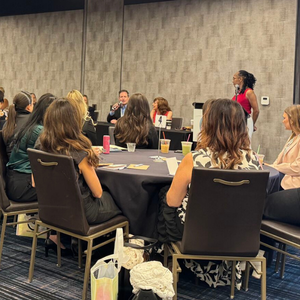
Lou and Fred designed their session as a conversation, not a lecture. As self-described "solutionaries," their approach is to bring the questions, invite the room to bring the experience, and build answers together. They want attendees to share what they've seen, what they've experienced, and what they're looking for. They want mentors and mentees to form in real time. And they want everyone to leave asking two questions: who is pouring into me, and who am I pouring into? If the answer to either is no one, that's the starting point.
"When you teach, you learn twice," Fred said. "As long as I'm learning, I'm growing. And if I'm growing, I'm a happy person."
The right mentor changes more than a career. They reshape confidence, restore belief, expand perspective, and create influence that outlives any title. Lou's three granddaughters, Brinley, Ezra, and Ivy, are already, in his words, "women in automotive in the future." Fred's son graduates college this December and is jumping into the industry. The legacy these two solutionaries are building is already multiplying into the next generation.
Join Lou Ramirez and Fred Lennartz at the 2026 Women In Automotive Annual Conference, July 17-20 in Austin, TX, for "The Right Mentor Matters: What to Look For (and What to Avoid) in Automotive." Register today, and find out which side of the mentorship table you belong on.