Automotive Workforce Development
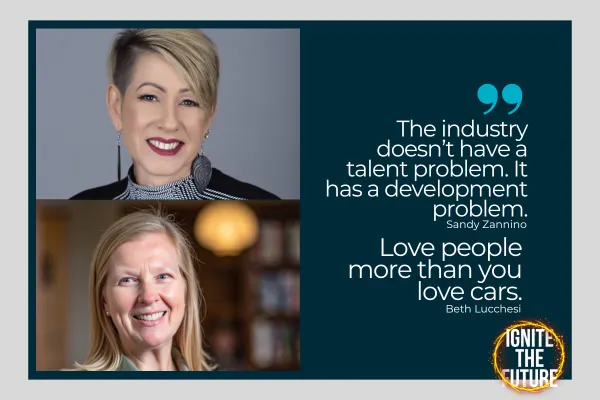
Sandy Zannino and Beth Lucchesi on Recruiting the Next Generation
"I ended up in automotive by accident."
If you've spent any time in this industry, you've heard that sentence. You may have said it yourself. Think back to how you got here. Was it a plan, or was it a phone call, a favor, a "just for now" that turned into a career? For decades, automotive has been built on those stories, on accidental careers and people who stumbled into dealerships and stayed because something about the work got under their skin. It's a great origin story. It's also a terrible recruiting strategy. And the woman who fell into automotive by accident and built something she's proud of is exactly the person who should be asking: what if someone had intentionally recruited me instead of leaving it to chance?
Sandy Zannino and Beth Lucchesi want to change the narrative. Sandy is the Founder and CEO of IAHR Consulting, and Business Development with ASC Automotive. She is an HR and workforce strategy expert with nearly 30 years in automotive. Beth is the Community Recruiting Specialist at CMA (Carter Myers Automotive), a passionate advocate for workforce development, and living proof of what happens when someone sees your potential before your resume does. Their Workshop at the 2026 Women In Automotive Annual Conference, July 17–20 in Austin, TX, "From Accident to On Purpose!," challenges the industry to stop waiting for people to accidentally discover automotive and start intentionally building the next generation instead.
The Two-Week Job That Became a Career
Beth's story is the one she leads with, and for good reason. The summer she graduated from high school in 1986, she didn't have a job lined up. Her parents were not thrilled. Through a family connection, a brand-new CMA location needed someone to answer phones for two weeks while they hired a receptionist. Beth showed up. Nobody at the location even knew she was coming.
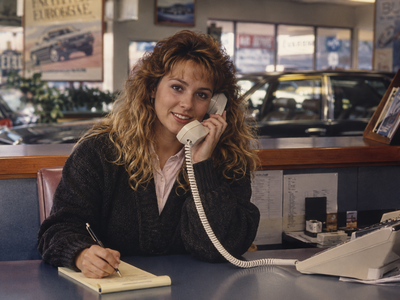
They set her up in the kitchen with a legal pad and a pen, because that's what you did in 1986. And for two weeks, she answered every phone call that came into that building. What happened over those 14 days changed the trajectory of her life. The managers in that building saw something in Beth that she didn't know she had: an ability to communicate, to make customers feel valued, to facilitate a process with warmth and competence. Instead of hiring a receptionist, they hired her.
"It was the first time that adults showed me that I had value and something to contribute," Beth said. "Not because of my family or who I was or what education I had, but just because of me." She worked for CMA for 19 years. Five years ago, she came back as their corporate recruiter, and she hasn't stopped running since. This year, one of her technician apprentices won the gold medal at the SkillsUSA High School Auto Tech Competition, representing the Commonwealth of Virginia. Two years in a row, a CMA apprentice has competed at that level. This year, they won!
The Face Nobody Wants to See
Ask Beth what happens when she tells people she works in automotive, and she'll describe "the face." You know the one. The slight wince, the polite confusion, the unspoken suggestion that you could probably do better.
"They go, uh, like, I'm sorry, can't you do anything else?" Beth said. The stigma is real. People still picture 1974, the leisure suit, the used car salesman pushing a lemon. They don't picture accounting departments, IT teams, logistics operations, marketing divisions, HR professionals, or the SaaS companies building the technology that runs modern dealerships.
"There is so much available no matter what you like," Sandy said. Whether it's STEM, engineering, turning wrenches, finance, or recruiting, the automotive ecosystem is vast. The industry's biggest problem isn't a lack of opportunity. It's that nobody is telling the story.
The Workforce Crisis Nobody Can Afford to Ignore
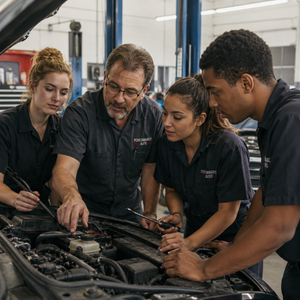
Sandy brings the data that makes the urgency concrete. In less than a decade, 70 percent of the automotive workforce will be millennials, Gen Z, and Gen Alpha. The generation that holds all the institutional knowledge, the experience, the hard-won expertise, is retiring. And the industry is losing that knowledge faster than it's transferring it.
"We have to tell people before they know," Sandy said, "that there are career paths in roles like accounting instead of trying to buy it." The "buy talent" approach, constant poaching and reactive hiring, might work as triage. But it doesn't solve the problem. The organizations that intentionally grow their own talent create stronger long-term stability. The ones that keep buying are running on a treadmill that gets faster every year.
Sales turnover industry-wide hovers around 70 percent. And here's the number that should haunt every hiring manager: salespeople take roughly three years to reach their maximum potential. If you're losing them before they get there, you're not just losing people. You're losing the return on every dollar you invested in them. In fixed ops, the math is even starker. Sandy estimates that a single empty technician bay costs a dealership roughly $500,000 a year in lost profit. That's not a workforce problem. That's a profitability crisis hiding inside one.
What Younger Generations Actually Want
Beth spends her days in schools, from elementary through university, and she sees the generational shift firsthand. The students she meets aren't less ambitious than previous generations. They're ambitious differently.
"They want to know how we're going to help them get where they want to go," Beth said. If the money covers their bills, that's fine. But they also want development, flexibility, a trajectory, and the knowledge that someone is invested in their growth. They want to know what they need to do to earn their first raise. They want reviews, mentorship, and a clear path forward.
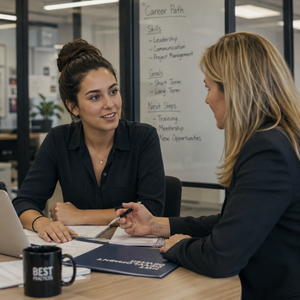
Beth is candid about how long it took her own generation to learn what these younger workers already know. She remembers her grandfather beaming with pride as she worked 65-hour weeks at CMA, making a name for herself. Meanwhile, her counterpart at another location was working 35 hours, teaching his team to do what he did, and going fishing. "It took me 20 years to learn that," Beth said. The younger generation isn't asking for less. They're asking for smarter. And the managers who can't make that distinction are losing the talent they need most.
The YouTube Problem
Sandy's most vivid example of what's wrong with automotive onboarding happened in her own family. Her daughter decided to try selling cars. The dealership hired her, put her on the floor, and told her to go to YouTube to learn the steps of the sale.
"She's asking for training," Sandy said. "She is pretty much begging for training because she's like, I want to succeed." That scenario plays out across the industry every day. Organizations hire people with energy and potential, then throw them into the deep end with no structure. When they fail, leadership blames the hire rather than the process.
Beth sees the same dynamic. "We find that awesome person, maybe they waited on us in retail somewhere, and then we convinced them that our place is the best place in the world to work. And then we send them in front of a laptop and go, have fun." The industry doesn't have a talent problem. It has a development problem.
Culture Is the Best Recruiting Tool You Already Have
Beth's philosophy on recruiting comes down to a single conviction: recruiting is everybody's responsibility. From the CEO to the newest hire, every person in an organization is either attracting talent or repelling it. If your employees aren't encouraging their friends and family to come work with you, Sandy has a suggestion: find out why.
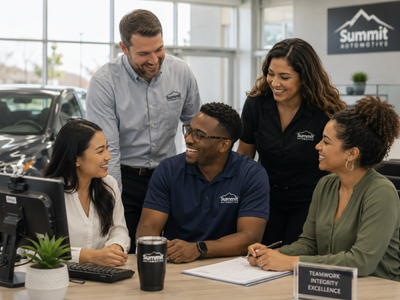
At CMA, referrals remain the highest source of new talent, even with a dedicated recruiting team on staff. That's not an accident. It's the result of a culture built on a principle Beth states simply: "Love people more than you love cars." When employees feel valued and invested in, they become the recruiting engine. When they don't, no amount of job postings or signing bonuses will compensate for what the culture is quietly communicating.
Building Instead of Buying
Beth's work at CMA is the living example of what Sandy's workforce strategy looks like in practice. None of it would have happened without CMA CEO Liza Borches, who recognized the need and created the role. "It was Liza's idea," Beth said. Over the past five years, Beth has launched a technician apprentice training program, built partnerships with schools across the community, established consistent presence in career and technical education programs, and is launching CMA's first accounting internship this August.
"What we're doing isn't anything new," Beth said. "How we're doing it is new." The difference is consistency. Service managers have always built relationships with tech school teachers, but they also have metrics to hit and fires to put out every day. Having a dedicated community recruiting role means CMA shows up even when the rest of the operation is busy. That consistency builds the pipeline.
And the investment isn't as daunting as leaders assume. Beth is direct about this: single-store dealers are doing it. "If they can do it, everybody can do it. It takes less time than you think, and less effort than you think. And the results are phenomenal."
"The solutions are simple," Beth said. "The problems are complex, but there are solutions and things that you can implement quickly that will create long-term results." The key word is commitment. Everyone has to buy in.
A Workshop for Everyone Who Hires, Mentors, or Coaches
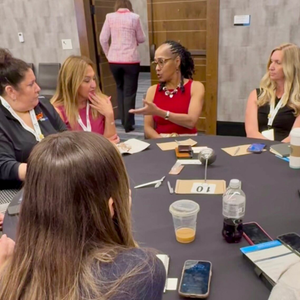
Sandy and Beth designed their workshop for leadership, HR professionals, recruiters, fixed ops managers, and anyone who touches hiring, onboarding, or development. Attendees will leave with workforce development strategies, generational leadership insights, practical apprenticeship frameworks, and actionable recruiting ideas they can implement regardless of organization size.
This is not just an HR session. It's a workforce strategy session, a leadership session, and a future-of-automotive session built by two women who bring the data and the heart in equal measure.
When asked why she does this work, Beth's answer was immediate: "Because I want people to know what they can be in automotive."
The next generation of automotive professionals is already out there. The question is whether the industry is willing to educate them, invite them, mentor them, and intentionally create space for them to succeed. Sandy and Beth are betting the answer is yes.
If you, like so many of us, fell into automotive by accident and built a career you love, you're living proof that the talent exists. The question is whether you're going to wait for the next version of you to stumble through the door, or whether you're going to go find her.
Join Sandy Zannino and Beth Lucchesi at the 2026 Women In Automotive Annual Conference, July 17–20 in Austin, TX, for "From Accident to On Purpose!" Register today, and start building the workforce you've been waiting for.