Gen Z Has Entered the Chat
Sydney Rizo on Leading Boldly Into the Future of Automotive

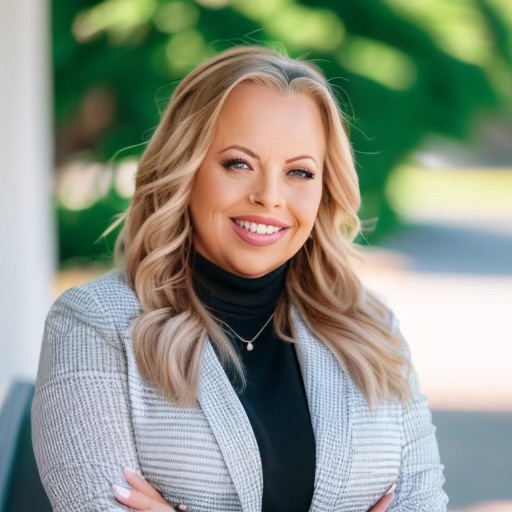
Sydney Rizo
Central Atlantic Region- Management Trainee at Toyota North America, Northwood Graduate, WIA 2025 Speaker
When Sydney Rizo took the stage at WIA 2025 to moderate a panel on Gen Z voices in automotive, she had a closing remark prepared—one she never got to deliver because the conversation was so rich, they ran out of time. The message she wanted to leave with the audience wasn’t just inspirational. It was a challenge that reframes everything we think we know about the next generation entering this industry.
At 22, Sydney has already earned her MBA, competed as a Division II athlete, led one of Northwood University’s signature automotive events, and launched her career as a Management Trainee at Toyota North America. But what makes her perspective valuable isn’t just what she’s accomplished—it’s how she’s thinking about what comes next.
Fresh from moderating the Driving Forward panel with fellow Northwood students and alumni, Sydney sat down to discuss what it really means when Gen Z enters the automotive industry. This isn’t a story about disruption for disruption’s sake. It’s about a generation that lived through a pandemic during their formative years, learned to adapt faster than anyone expected, and is now bringing that energy into an industry ready for it.
When "As a Woman" Became "As Someone Making an Impact"
One shift caught Sydney’s attention immediately at this year’s conference compared to last year’s event. “You never really heard the dialogue framed as ‘as a woman in the industry, how do you feel,'” she explained. “It was ‘as someone who is making an impact in the industry, where do you see it heading? What are you doing? What’s your role?'”

That linguistic shift matters. It’s not about ignoring gender—it’s about leading with competence and vision first. For the women in automotive, professionals at every career stage, this reframing opens up different conversations. Instead of constantly contextualizing achievements within gender dynamics, the focus shifts to expertise, innovation, and results.
Sydney saw this play out during her panel when Hannah Wood shared that within her first week interning at Garber, she’d already sold her first car on the used lot. When Brianne talked about bringing “boss energy” to every interaction, she wasn’t asking permission. She was stating intention.
This confidence isn’t arrogance. It’s the power of a generation that watched older women clear paths, learned from their strategies, and now has permission to show up fully as themselves from day one. “The older generations are teaching us younger generations not to shy down from who you are,” Sydney noted. That mentorship creates a multiplier effect, each generation’s courage makes space for the next.
The "Why Not Me?" Mindset That Changes Everything
During Sydney’s junior year on Northwood’s soccer team, they adopted a motto: “Why not us?” That season, they won their conference, won the conference tournament, and made the school’s first-ever NCAA appearance. Three milestones. One unshakeable belief.
Sydney carried that question into her career but personalized it. “Why not me?” became her framework for every opportunity that seemed ambitious or outside her reach. Someone else got that role? Why not me next time? Someone else is speaking on that panel? Why not me too?
This isn’t blind optimism. It’s strategic self-advocacy backed by preparation. Sydney credits Northwood with building this foundation. From day one of freshman year, students create LinkedIn profiles, craft “rockstar introductions,” and learn that networking isn’t optional. By the time they graduate, connecting with industry leaders feels natural, not intimidating.
The next generation in automotive isn’t waiting for permission to lead. They’re asking better questions: Why not now? Why not this way? Why not with this team? And then they’re executing.
What Happens When You Bring Your Full Self to Work
Something unexpected emerged during Sydney’s panel: the conversation about authenticity became less about “being yourself” in some abstract sense and more about what that practically enables. When students discussed their passions—sales, data analytics, operations—each was demonstrating how personality becomes a professional advantage.
Sydney articulated something crucial: “I think women bring so many different traits and perspectives differently than men. And men bring different perspectives and traits.” There’s balance in that diversity, not competition. The goal isn’t to prove women can do everything men can do in exactly the same way. It’s to bring complementary strengths that make teams stronger.
Sydney mentioned how when a Gen Z voice speaks in a meeting, “everyone’s off their phone. Everyone’s more engaged.” It’s not that younger professionals have magical powers—it’s that fresh perspectives shake people out of autopilot. They ask questions that seem obvious only because everyone else stopped asking them years ago.
But here’s what makes this powerful rather than just disruptive: Gen Z professionals like Sydney are equally committed to listening. “That also means for us to listen to other perspectives and be adaptable too,” she emphasized. This isn’t generational warfare. It’s collaborative evolution.
The practical application? Audit where you’re self-editing at work. Sydney went from “more of an introvert” in college to confidently moderating national panels—not because she became someone else, but because she had repeated opportunities to practice showing up fully.
From College Athlete to Corporate Professional
Playing Division II soccer while earning an MBA wasn’t just about juggling a packed schedule. It was about the self-discipline required when no one’s standing at your desk telling you what to do next.
“No one’s going to be at your desk 24/7 telling you what to do,” Sydney explained. “You have to take it by the neck and just run with it.” This accountability mindset, holding yourself to the standard you’d hold a teammate, changes how you approach every project.
But the deeper lesson Sydney carried forward wasn’t about individual discipline. It was about team culture. “I will always go back to my junior year,” she reflected. “Having such a great team and a great support system—that was something I looked for in a company I wanted to work for.” And she found it at Toyota, specifically noting the collaborative environment where “everyone wants the best for each other.”
For anyone hiring or mentoring Gen Z talent, this matters. This generation isn’t just bringing new skills—they’re bringing new expectations about what healthy workplace culture looks like. They watched their parents burn out. They came of age during a pandemic that made everyone question what work should look like. They’re not interested in paying dues in environments that don’t invest back in them.
When "No" Becomes Fuel
Sydney attended a small breakout session with Rebecca Jenkins that left a lasting impression. Rebecca shared her evolution in the industry, including a moment when a male GM shut down her advancement. Rather than accepting that no as final, Rebecca used it as momentum. She progressed anyway.
“You’re going to be told no,” Sydney reflected, “and it’s how you react to that that really says who you are and where you see your future.”
This perspective reframes rejection completely. Not every no is personal. Not every no is permanent. Some no’s are protective; wrong timing, wrong fit, wrong role. Others are simply obstacles that require creativity to navigate around.
The question isn’t whether you’ll face rejection in your career. You will. The question is whether you’ll treat each no as information or as verdict.
What "Listening to Gen Z" Actually Means
Sydney’s biggest hope from the panel was straightforward: “Really just listening to our generation. Being open to change.”
Here’s what makes Gen Z’s relationship with change different: they’ve been surrounded by it during the exact period when most people form their core identity. From high school through college, they navigated a pandemic, remote everything, social upheaval, and economic uncertainty. That’s formative experience that built different muscles.
“We lived through a pandemic through one of the most growth potential areas of our lives,” Sydney reflected. They were “so quick and adaptable to change” by necessity, not choice. Now they’re entering workplaces where that adaptability is exactly what’s needed.
But Sydney emphasized something crucial: this isn’t one-way. “That also means for us to listen to other perspectives and be adaptable too.” The strongest organizations won’t be the ones where Gen Z simply replaces older workers. They’ll be the ones where multiple generations are genuinely learning from each other.
When a newer team member proposes something that seems impossible, instead of shutting it down with “we’ve tried that before,” try “here’s what didn’t work last time, how might we approach it differently now?” That’s listening. That’s collaboration. That’s how industries evolve.
Building Relationships, One Dealer Contact at a Time
In her new role at Toyota North America, Sydney’s already completed her first dealer contact and can’t wait to connect with every Toyota dealership across the Upper East Coast. This enthusiasm comes from understanding that relationship-building is the foundation of everything that follows.
“I just think connecting with dealers and learning more about their operations and their side” is what excites her most right now. Despite having significant automotive education, she approaches each conversation with curiosity rather than certainty. “I can be a sponge and soak everything up.”
For anyone in early career stages, Sydney’s approach offers a blueprint:
Lead with curiosity.
Ask questions that demonstrate you’ve done your homework and want to go deeper.
Treat every conversation as a chance to understand someone else’s challenges.
The expertise will build naturally from there.
The Closing She Wanted to Give
That panel at WIA 2025 ran over time because the conversation was too important to cut short. But Sydney had prepared closing remarks that deserved to be heard. Here’s what she wanted to leave the audience with:
What if Gen Z doesn’t see car ownership as the dream anymore, as the root of their freedom? And what does that mean for dealerships, for the way we sell, and the future of mobility?
Because while Gen Z may be shifting what freedom looks like, we’re not shifting our values. It’s about personal responsibility, integrity, and possessing the key characteristics that it takes to become the next generation of rising leaders.
We learn that accountability matters, a hard work ethic is influential, and recognizing the interconnectedness of the global economy drives new perspectives. We aren’t afraid of change. We’re built for it.
But we also know that real progress doesn’t happen alone. Because behind every young professional stepping into this industry, there is someone that makes room for them. A professor, a teammate, a mentor, an industry expert who pulled up a chair.
The future of automotive doesn’t just depend on the latest EV or digital breakthrough. It depends on innovative leadership. On intentional mentorship and investing in emerging talent.
So to the industry veterans in the room, the ones who came before us: We thank you for constantly pulling up a chair for our generation. Thank you for listening, for challenging, and for pushing us to aim higher and think deeper. For allowing us to channel our inner “rockstar.” Because your path is the bridge to all of our future success.
And to my peers: when you find yourself at a new table, pull up a chair for the person behind you. Create a path for the next person. Because the future isn’t something we inherit, it’s something we build.
And then Sydney’s final statement, the one that reframes the entire conversation:
Gen Z isn’t the future of automotive. We’re shaping the present.
Not preparing to lead. Leading now. Not waiting for permission. Taking responsibility. Not the leaders of tomorrow. The colleagues of today who happen to see some things differently.
That subtle shift—from future to present—is everything. It moves Gen Z from abstract concept to current reality. It invites collaboration instead of patience. It suggests that the innovations this generation brings aren’t something to prepare for down the road. They’re happening in real time, in dealerships and corporate offices, in every conversation between a 22-year-old management trainee and a dealer who’s been in the business for decades.
The automotive industry’s evolution won’t be determined by one generation or another. It will be built by veterans who pull up chairs and newcomers who do the same for whoever comes next. By people who ask “why not me?” and then clear the path for others to ask the same question. By professionals at every stage who choose collaboration over competition and curiosity over certainty.
Sydney Rizo walked off that WIA stage without delivering these words, but they’re echoing through the industry anyway. In every dealer contact she makes at Toyota. In every conversation, her fellow Northwood students have. In every moment where an industry veteran chooses to listen to a perspective that challenges their assumptions. In every chair that gets pulled up to every table.
Ready to pull up a chair and shape the present with us? Join the conversation and connect with mentors who are invested in your success at Women In Automotive. Explore resources, upcoming events, and a community that leads with impact. And if you’re a student or know someone who is, discover the scholarship opportunities available through the partnership between Women In Automotive and Northwood University—because investing in the next generation starts with creating access to the education that builds leaders like Sydney. The question isn’t whether you’re the future of this industry. It’s what you’re building right now.