People and Culture in Automotive
How Female Talent Thrives in the Right Environment
Stephanie Hancock has been in human resources for over 15 years, and somewhere along the way she started doing something that wasn’t in any onboarding script: at the close of every orientation she ran, she’d thank the new hire for choosing to work there. Not because anyone told her to. Because she meant it. “I wanted them to know it was a choice,” she explains, “and it was an intentional choice for them to select us.” That instinct, to treat people as active participants rather than resources being deployed, is the throughline of everything she does. It’s also the thing she’s bringing to the 2026 Women In Automotive Annual Conference in Austin this July, where she’ll challenge the audience to stop waiting for their organizations to change and start asking a harder question: what are you doing to make it happen?
As Director of People and Culture at Dealer Image Pro, Stephanie sits at the intersection of business strategy and human behavior, a space many organizations, especially in automotive, have historically underinvested in and increasingly can’t afford to ignore. The real transformation challenge, she’ll tell you plainly, isn’t the technology. It never was. The gap stalling many automotive organizations right now is the gap between where the business is going and whether the people inside it have been developed, trusted, and genuinely included enough to get there. Her session, From Women Who Drive Change: Building Cultures Where Female Talent Thrives, is the roadmap for closing it, from wherever you sit in the org chart.
People and Culture Strategy in Automotive Organizations: When the Business Moves Forward and the People Don’t

Here’s the version of transformation that gets celebrated: new platforms launch, new roles get created, new processes roll out. What gets discussed far less is what happens to the people expected to keep pace with all of it, especially when no one has invested in preparing them to do so. The technology advances, the strategy shifts, and People and Culture, the function responsible for developing the humans who are supposed to execute all of it, gets treated as a secondary concern. “If we don’t understand the business objectives,” Stephanie says, “we can’t develop people to keep up.” Every time HR is left out of strategic conversations, the workforce pays the price. If you’re a woman in automotive trying to lead through change right now, you may already know exactly what that gap feels like from the inside.
The result is teams that are perpetually behind, not because they lack capability, but because no one connected the dots between where the business is going and what people need to get there. Change lands without context. The gap between what leadership expects and what employees can actually deliver quietly widens until it isn’t quiet anymore.
Strategy without people development isn’t transformation. It’s just pressure with a new name.
Building Workplace Trust and Culture: Why It Starts Long Before Day One
Ask Stephanie why change initiatives fail and she’ll tell you something that takes most organizations by surprise: the problem usually isn’t the change itself. “If you don’t have a foundation of trust in your org,” she says simply, “change is going to be very difficult.” When people walk through the door, they bring their whole selves, including every experience they’ve had where change wasn’t safe, where trust was broken, where they were left without support. That history shows up. Some people go quiet. Some go loud. Both are signaling the same thing: the foundation isn’t solid enough to hold something new.
“All of this starts through the hiring process,” she says. “If you’re consistent, if you follow through, if you don’t ghost people, if you have general respect, that is the foundation right there.” The way a candidate is treated before they accept the offer is the first data point they have about who you actually are. First-day readiness. Onboarding that signals we were expecting you specifically. The kind of belonging that doesn’t wait for the 90-day review to start being built.

She points to a study from Google: two groups of new hires received onboarding swag. One group’s items were generic. The other group’s were embroidered with their name. The personalized group stayed longer, because of what the sweatshirt communicated: someone knew my name before I arrived. I belong. That’s what led Stephanie to close every orientation with a genuine thank you. “I wanted them to know it was a choice,” she says, “and we’re appreciative and so glad that you’re part of our team.” It wasn’t scripted. It was something she believed. And the people in those rooms could feel the difference.
Culture isn’t what you say you are. It’s what people experience from the moment they first encounter you, and it either builds trust or erodes it from there.
Emotional Intelligence in the Workplace: The Leadership Skill That Determines Whether Women Thrive or Just Survive
Here’s something worth asking yourself honestly: how many organizations have you been part of that said the right things about inclusion, and still felt like, somehow, you weren’t quite heard? Stephanie has a name for that gap. She calls it the difference between a welcome sign and what’s waiting behind the door. “You can have a welcome sign,” she says, “but if you’ve got a shotgun waiting behind it, that’s not going to make people feel too welcome.” The sign is policy. The shotgun is lived experience. For women in automotive who have spent careers navigating environments that looked inclusive on paper and felt very different in practice, that analogy lands.
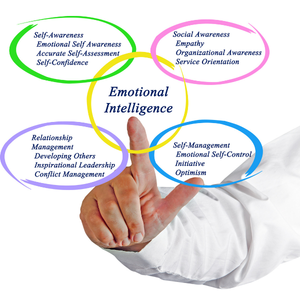
Closing that gap starts with emotional intelligence, a core People & Culture competency, specifically the part most leadership programs skip. “You can read all the EQ books you want,” she says, “but if you don’t start with you… it’s not going to have an impact.” Self-awareness is the entry point. The goal isn’t to disclose your history, it’s to know it’s there, and to stay curious about what might be present in the people around you. “Be aware of whatever your triggers are,” she says, “and as you’re interacting with people… you have no idea what you could trigger in them.” That bidirectional awareness is what separates leaders who build safe environments from those who accidentally dismantle them.
This is where supporting women in automotive gets complex, and where Stephanie doesn’t let organizations off the hook. “It’s one thing to say, we have a women’s leadership group, or yes, we have two women on our leadership team. But do you silence their voices?” You can have women in the room and still not hear them. Fostering belonging, real belonging, requires conscious attention to the everyday behaviors that undermine it, including the ones that aren’t intentional.
Having women in the room is not the same as creating an environment where female talent thrives. One is a headcount. The other is a commitment.
Influence in the Workplace: Why Women in Automotive Leadership Don’t Need a Title to Drive Change
So if the environment isn’t what it should be, if the welcome sign doesn’t match what’s behind the door, what do you do with that? Stephanie’s answer is direct, and it’s the core of her session: you stop waiting for someone with a bigger title to fix it, and you start using the influence you already have.
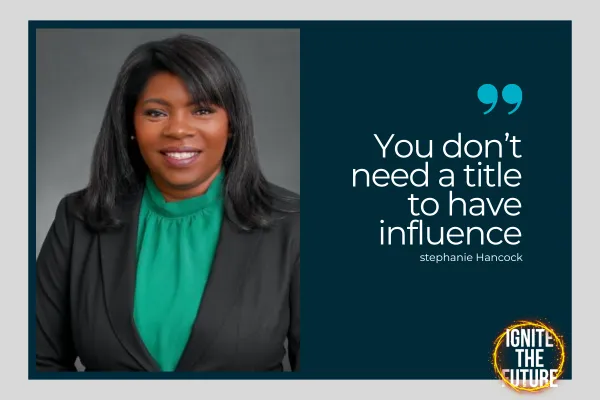
“You don’t need a title to have influence,” she says. “You just need to show up and be confident and create.” Influence is built through behavior, through the everyday interactions that either reinforce a culture or quietly begin to shift it. She offers a precise example: if you hear a manager speaking negatively about a colleague behind their back, you don’t need a VP title to respond. You can simply ask: Does she know you feel that way? That’s not confrontation. That’s accountability and it’s available to you right now, from whatever seat you’re in.
“When we’re silent, that’s agreement.” If you’ve ever stayed quiet when a colleague’s idea got credited to someone else or when a comment in a meeting made the room feel smaller, you already know what that silence costs. Your voice, even without a title behind it, is one of the most powerful change tools in the room.
And if you’ve been waiting for your environment to improve before you step forward? She doesn’t soften it. “They’re wasting time. You can’t wait for other people.” This is your career. The ownership of your development, your trajectory, and your impact belongs to you. Mentorship accelerates that, and for WIA members, the organization’s mentoring program is one of the most direct paths to growth that feels impossible to do alone.
Your difference is your strength. And the influence you’ve been waiting for permission to use? You already have it. The only question is whether you’re using it.

Building an Inclusive Workplace Culture: The Question That Shifts Everything
Culture isn’t something leadership creates and hands down. It’s something every person in the organization participates in building, which means you can’t assign full responsibility for a broken culture to the people above you. It also means you don’t have to wait for them to fix it.
The challenge she’s bringing to Austin is the one most people sidestep: “What are you doing to add to this equation?” Holding yourself accountable for your contribution, speaking up, showing up, modeling the behavior you want reflected back, is how change actually starts. “Sometimes we have to be the mirror,” she says. “We’re going to have to reflect what we want to see.” Belonging isn’t built by a program. It’s built by people, every day, making choices about how they show up for each other.
Change starts with awareness. It continues with action. And it belongs to everyone in the room—title or not.
Hear Stephanie Hancock at the 2026 Women In Automotive Annual Conference

You walked into this article thinking about what your organization needs to do differently. You’ll walk into Stephanie Hancock’s session thinking about what you are going to do differently, and leaving with the practical tools to start. Women Who Drive Change: Building Cultures Where Female Talent Thrives is a direct, actionable challenge to the belief that influence requires authority, change requires permission, or belonging requires a policy. None of it does. It requires you.
The 2026 Women In Automotive Annual Conference brings together women across automotive careers, from dealership leadership and People and Culture to OEMs, technology companies, and beyond for the conversations that build the cultures and workplaces women deserve within the automotive industry. Stephanie’s session is the kind you’ll be turning over in your mind on the drive home from Austin. Registration and details are available at womeninautomotive.com. Come ready to be challenged and ready to answer the question she’s going to ask you: what are you doing to add to this equation?