
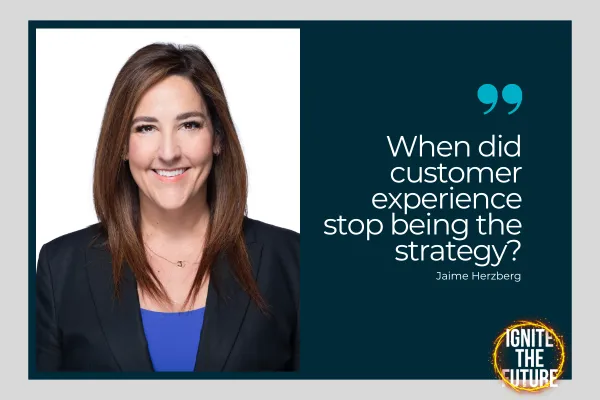
Customer Experience in Automotive
Jaime Herzberg on the Competitive Advantage Most Dealerships Ignore
Every company in automotive says the customer comes first. It's on the website, in the mission statement, threaded through the values page. And yet, when was the last time you sat down at your own dealership's website and tried to schedule a service appointment as if you were a customer? When was the last time you clicked through every page, every tool, every pop-up, and asked yourself whether any of it actually made sense to a person who doesn't speak this industry's language? If the honest answer is never, you're not alone. And that gap between what companies say about the customer and what customers actually experience is exactly where Jaime Herzberg has built her career. As the Director of Elite Client Care at Dealer Stream, Jaime has spent nearly two decades on both the retail and vendor sides of automotive, and she keeps arriving at the same uncomfortable conclusion: the industry talks about customer experience constantly and invests in it rarely. Her Breakout Session at the 2026 Women In Automotive Annual Conference, July 17–20 in Austin, TX, "The Customer Experience: Your Competitive Advantage", starts with a provocation that should make every leader in the room uncomfortable: when did customer experience stop being the strategy?
Howard's Mother Loves You
Jaime didn't learn customer experience from a training manual. She learned it from a cookie tin.
She grew up in a family-owned dealership, a true PhD, as the industry says, a "papa had a dealership" kid. Her grandfather Howard started the store in the 1960s, and her father ran it until he sold and retired in 2019. It was a single rooftop, not a big group, and the philosophy was simple: the customer comes first. Not as a slogan. As a culture.
The story that captures it best is one Jaime's father dreamed up with an ad agency in the eighties or nineties. For every car sold, the dealership gave away a tin of cookies branded with a grandmother's face and the tagline "Howard's Mother Loves You." Stickers on the cars, the whole campaign. When the promotion faded during the 2008 recession, Jaime was the one who brought it back; updating the campaign as Howard's granddaughter, doing radio commercials herself, and keeping the cookies at the center of it all.

It's a charming story. It's also a business lesson. Jaime watched her father and grandfather make decisions that didn't always look right on paper, losing a dollar in the short term to build a relationship worth ten in the long term. That math doesn't show up on a monthly P&L. It shows up in the customer who comes back, who tells a friend, who writes the review that brings in the next one. "The customer is your bottom line," Jaime said. "If you want to get the dollar amount as your bottom line, the customers are how you get there."
Every business has, or had, its own version of "Howard's Mother Loves You." The question Jaime wants you to sit with is: what was yours, and when did you stop doing it?
When Technology Solves the Wrong Problem
Jaime isn't anti-technology. She uses automation in her own role and sees its value daily. But she draws a sharp line between technology that serves the customer and technology that serves the company while forgetting the customer exists.
Her example is one every dealership professional will recognize: the website. Dealers are constantly presented with new tools, digital retailing platforms, chat widgets, scheduling systems, lead capture overlays, and the instinct is to add more. But how many dealerships actually walk through their own website the way a customer would? Broken links, information overload, confusing navigation, and industry jargon that means nothing to the person trying to figure out what they need.

"They have LOF as something you schedule," Jaime said, referencing service scheduler tools. "Most people don't know what LOF is unless you're a technician or a service writer." It's a small example with a big implication: when you build for efficiency instead of experience, you lose the customer at the exact moment you're trying to serve them.
The same tension plays out with AI. Jaime's husband, who works in automotive retail, sees it daily with their AI chatbot. It answers questions quickly, which is genuinely valuable. It also eliminates the personal element and frustrates customers who want to talk to a human being, which is genuinely costly. The technology has a place. But when it replaces connection instead of enabling it, especially for a purchase as significant and emotional as a vehicle, the balance tips in the wrong direction.
You Can't Outsell a Poor Customer Experience
This is where Jaime's message shifts from customer-facing operations to organizational strategy, and where it becomes most relevant for leaders.
She sees the same pattern across the vendor side of automotive: companies pour resources into sales teams while starving customer success. Sales gets the training, the headcount, the compensation. Customer success gets overloaded, under-resourced, and expected to retain clients without the tools or support to do it. And when customers leave, the instinct is to blame the CS team, or worse, to hire more salespeople to replace the lost revenue rather than fixing the experience that drove customers away. If you've been on the team that got blamed for a retention problem you didn't create, or if you've been the leader who defaulted to "we just need more sales" without asking why customers were leaving in the first place, you already know this pattern. Jaime wants to break it.
"You can't outrun that," she said. The math doesn't work. Acquisition without retention is a leaking bucket, and no amount of new business will compensate for an experience that pushes existing customers out the door.
In a dealership setting, the dynamic looks different but the principle is the same. Sales and service aren't separate customer experiences, the customer sees one business, regardless of what the org chart says. Culture, not departments, determines whether the experience holds together or falls apart at every handoff.
Customer Experience Is a Team Sport
If there's one thing Jaime wants every attendee to take away from her session, it's this: customer experience is not a department. It's not a role. It's a team effort that requires every person in the organization to have a hand in it.

She saw this principle in action during her time at Trade Pending, working alongside account executive Megan Demaree. Most salespeople sell the deal and move on. Megan never did. She stayed involved through onboarding, through customer success, through the entire lifecycle. The result wasn't just better retention, it was deeper relationships, stronger trust, and a collaborative dynamic that made everyone's job easier.
"She never said, 'I sold it, I'm done,'" Jaime recalled. That single behavior, refusing to wash your hands of a customer after the transaction, is the difference between a company that talks about customer experience and one that actually delivers it. And it requires intent. It requires leadership that models the behavior, culture that rewards it, and accountability that extends beyond the sale.
The Four Pillars — and Why Slowing Down Comes First
Jaime's session is built around four pillars of extraordinary customer experience: slow down, pay attention, listen, and be flexible. She's saving the depth for the room in Austin, but the order is deliberate, and the first pillar is the one the industry resists most.
Slowing down feels counterintuitive in an industry built on speed, volume, and monthly resets, an industry that rewards the fastest response, the quickest close, the most deals by the 30th. And yet Jaime's experience across retail, vendor, and family business has taught her that rushing creates mistakes, misunderstandings, and missed opportunities. When you slow down enough to actually understand what a customer needs, the solution becomes easier to find. The sale becomes stronger. The relationship becomes real.

"If you slow down, it all comes into focus," Jaime said. It's the same principle every sales manager has given in a tough month: go back to the basics. The fundamentals haven't changed. They've just been buried under layers of tools, technology, and urgency that the customer never asked for.
A Session for Anyone Who Touches a Customer
Jaime designed her session for dealership leaders, vendor professionals, customer success teams, and anyone in automotive whose work ultimately connects to a customer, which is everyone. Attendees will leave with a new framework for evaluating their customer experience, practical strategies for aligning teams around the customer rather than around departments, and a renewed understanding of why the basics still outperform the shiny objects.
"The customer experience is your best marketing tool," Jaime said. "When you think about the bottom line, there you go."
Technology will keep evolving. AI will keep advancing. The tools will keep multiplying. But the customers on the other side of all that innovation still want the same thing they've always wanted: to feel heard, valued, and understood. That hasn't changed. And the leaders who remember it will always have the advantage.
Jaime's message extends beyond the customer, too. One of the most important things she's learned through the Women In Automotive community is that the same principle applies to how women build careers in this industry. "There are people in this industry that will support you," Jaime said, "and you will go so much farther that way." The old belief, that the only path forward in a male-dominated industry is to be louder and more aggressive than everyone around you, isn't just wrong. It's the professional equivalent of outselling a poor customer experience. Connection, collaboration, and genuine investment in people will always outperform competition alone.
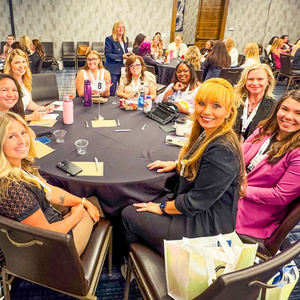
Join Jaime Herzberg at the 2026 Women In Automotive Annual Conference, July 17–20 in Austin, TX, for "The Customer Experience: Your Competitive Advantage." This is Jaime's third WIA conference, and every year she walks away with connections and insights that reshape how she works. This year, she's the one on stage, and she's bringing the same collaborative, no-pretense energy that defines the WIA community. Register today and rediscover the strategy that was never supposed to go away.