Mentorship vs Sponsorship
The Career Advancement Strategy Women in Automotive Need to Know
You've done the work. You've stayed late, carried the team, solved the problems no one else wanted to touch, and delivered results that speak for themselves. And yet, when the promotions are announced, when the leadership opportunities surface, when the doors open to the next level, your name isn't in the conversation. Not because you didn't earn it. Because the people making the decisions didn't know what you did.
Jessica Smith has lived that gap. She's studied it, built a framework around it, and spent years helping women close it. As the Director of Account Management and Sales at Solera, the host of the "Lead Like a Girl" podcast (108 episodes and counting), and a woman who rebuilt her career from the ground up after a successful 20-year run ended overnight, Jessica has seen both sides of the advancement equation. Her Breakout Session at the 2026 Women In Automotive Annual Conference, July 17–20 in Austin, TX, "The Seat at the Table Playbook: From Mentorship to Sponsorship," is built around a distinction that she believes is the single most important thing most women have never been taught: the difference between someone who helps you grow and someone who helps you go.
The Playbook Nobody Handed Her
Jessica's story doesn't start in a boardroom. It starts as a teenager, pregnant and trying to figure out how to survive. "My first real job was being a teen mom," she said. That reality put her to work earlier than most, and she landed under mentors who didn't just teach her sales. They taught her financial literacy, leadership, and character development. She built a 20-year career in that environment, thriving under strong mentorship without ever realizing that's what it was. She just thought she had great bosses.

Then everything changed. Jessica found herself starting over, entering corporate America and the automotive industry simultaneously in 2017. She took an entry-level role after two decades of success, and she quickly realized she was missing something everyone around her seemed to already know.
"I didn't know anything about what I call the playbook," she said. The unwritten rules of corporate advancement, the dynamics of influence, the difference between doing great work and being positioned for opportunity. None of it had been part of her world before. And the advice she'd always followed, put your head down and work hard, wasn't enough anymore.
Mentors Help You Grow. Sponsors Help You Go.
This is the distinction at the heart of Jessica's session, and it's the one she believes changes careers when women finally understand it.
Mentors teach, guide, develop, and encourage. They pour into you. They help you become better at what you do. And they are essential. Jessica will never diminish what mentorship gave her, because it gave her everything for 20 years. But mentorship alone has a ceiling.
Sponsors do something different. Sponsors advocate. They recommend. They use their influence to open doors that would otherwise stay shut. They say your name in rooms you're not in, to people who have the power to change your trajectory. And that distinction, between being developed and being positioned, is where most women's advancement stalls.
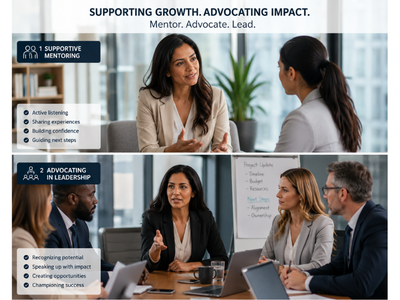
"Mentors help you grow, but sponsors help you go," Jessica said, drawing on Sylvia Ann Hewlett's research in Forget a Mentor, Find a Sponsor. The data supports what Jessica has experienced firsthand: high-performing employees with sponsors are far more likely to actually advance, not just grow in place.
Every Role She's Had Came Through a Phone Call
Jessica doesn't just teach this concept. She's proof of it. Since entering the automotive industry in 2017, she has held six different roles. Not one of them came through a traditional application process. Every single one came through sponsorship, through someone making a phone call on her behalf, putting her name forward, and opening a door she didn't even know existed.
"Even the role that I sit in today, someone made a phone call on my behalf," she said. "I wasn't getting offers before that phone call was made. One week later, I got a job offer. That is sponsorship."
The most powerful example isn't even about her. At a President's Club trip in Maui, Jessica's husband, a natural introvert, connected with a retired CFO over casual conversation. Six weeks later, that CFO called with a job offer. Nearly $100,000 in cybersecurity, a field her husband had barely started studying. The CFO's logic was simple: if Jessica is who she says she is, and she shows up the way she does, chances are her husband is the same kind of person. He made a bet on the family, not just the resume. Jessica's husband finished his cybersecurity degree, earned a master's in organizational leadership (fully funded by the company), and walked the stage two weeks before this interview.
Jessica sent the now-retired CFO a photo of her husband at graduation with a message: "Just so you know, you have forever changed my family."
That is what sponsorship looks like when it works. One phone call. One person willing to use their influence. An entire family's trajectory altered.
Why Women Don't Ask
If sponsorship is this powerful, why aren't more women pursuing it? Jessica's answer is uncomfortable and direct: because most women don't ask.
"I come from a culture that you don't ask anybody for anything," she said. "You just do it yourself because you don't want to owe anybody anything." That self-reliance, which feels like strength, quietly becomes a career limitation. Women wait to be discovered instead of intentionally positioning themselves. They assume their work will speak for itself. And they stay silent while less-qualified colleagues who understood the playbook move past them.
Jessica pushes back on the assumption that women are excluded from sponsorship. In many cases, she believes, they're not being denied. They're not asking. "I believe that there's a huge percentage of us that are underpaid because we have not asked. Not because they don't want to give it to us."
That's a challenging message, and Jessica knows it. She's been "kicked out of girls clubs" for saying it. But she'd rather deliver the truth that changes careers than the comfort that keeps women stuck. She's equally honest about the reality of bias. It exists, it's real, and she addresses it head-on in her session. But her perspective is practical: bias is something she can't control. Strategy is something she can. "I can use my strategy to outmaneuver the bias," she said. That reframe, from helplessness to agency, is what makes her message land differently than most conversations about advancement.
Think about the last time you had a big win and told no one. The last time you left a networking conversation without asking for an introduction. The last time you assumed your work would speak for itself and then watched someone with less experience but more visibility get the opportunity you'd earned. That pattern has a name now. And Jessica's session is built to help you break it.
Visibility Is Not Vanity
The cultural conditioning runs deep. Women are taught not to brag, not to self-promote, not to take up space with their accomplishments. Jessica heard it from childhood: be quiet, sit up straight, smile. And those lessons followed her into every conference room, every performance review, every moment where she could have told her story and didn't.
A mentor finally broke the pattern with six words: "It ain't bragging if it's true."
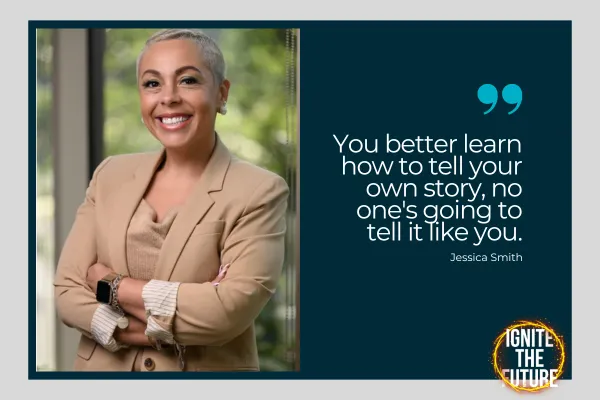
"You better learn how to tell your own story," Jessica said, "because if you don't, no one's going to tell it like you." The people making advancement decisions cannot reward work they never see. And hoping your manager will carry your story up the chain is a gamble most women lose. "It's not about what you did," Jessica said. "It's about who knows what you did."
Be Sponsor Ready
Jessica is equally direct about the other side of the equation. Sponsorship opens doors. But you still have to perform when you walk through them.
"Don't ask for exposure and then show up and fail," she said. Being sponsor ready means your work is excellent, your delivery is reliable, and your character is consistent. Sponsors are putting their own reputation on the line when they advocate for you. If they make a call and you don't deliver, that door closes for you and for the next person who needed it.

Jessica's approach is rooted in something that can't be faked: a genuine heart for service. She credits her faith for that instinct. "Ever since I can remember, back to four years old, I would wake up and just look for someone that I can help with something," she said. "I really believe that that has been the greatest gift that God has ever given me." It shows in how she networks, how she mentors, and how she moves through the world. Keith Ferrazzi's Never Eat Alone gave her the framework, but the impulse to serve came first.
She ends every conversation with an offer to help. She shows up looking for ways to add value before she ever asks for anything. And when an executive takes her up on that offer, she treats it as her one shot to prove what she can do. "All I need is one shot," she said. "And then I show up and I do what I do."
The Thanksgiving phone call is the story that proves it. A VP at her company called Jessica on Thanksgiving Day and said, "Every time I would see you on the campus, you were always helping someone. How can I help you?" Jessica hadn't asked for that call. She'd earned it by being the person who showed up to serve, consistently, visibly, and without expecting anything in return. That is the moment sponsorship arrives. Not when you ask for it directly, but when someone who has been watching you decides you're worth investing in.
A Session for Every Woman Who Feels Stuck
Jessica designed her session for the woman who has been doing everything right and still feels like something is missing from the equation. Whether you're early in your career and trying to understand how advancement actually works, or you're a seasoned leader wondering why you've plateaued, the playbook applies. Jessica's mentoring inbox confirms it. She's working with a data scientist straight out of college and a VP from Cox Automotive in the same week. The common thread isn't career level. It's the feeling of being stuck and not knowing what's missing.
Her podcast, "Lead Like a Girl," was born from the same conviction. During the pandemic, Jessica watched women leave corporate leadership in waves because they believed the only way to lead was to mirror their male counterparts. Her response was direct: you can still lead like a girl. Cancel the meeting because your kid is sick. Say it out loud. And know that you're still going to get it done, and probably better.
Attendees will leave with a clear understanding of the mentorship-to-sponsorship pipeline, practical strategies for building visibility without feeling inauthentic, networking frameworks rooted in service rather than transaction, and the confidence to start asking for what they've already earned.
This is not generic career advice. It's the roadmap Jessica wishes someone had handed her 20 years ago, built from lived experience, research, and the stories of hundreds of women she's mentored along the way.
Join Jessica Smith at the 2026 Women In Automotive Annual Conference, July 17–20 in Austin, TX, for "The Seat at the Table Playbook: From Mentorship to Sponsorship." Register today. Stop waiting to be noticed, and learn how advancement actually works.