
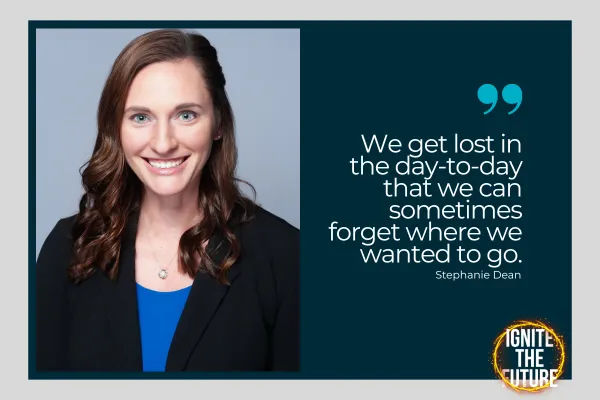
How to Rekindle Your Passion in Automotive
Stephanie Dean on Finding Purpose Again
The goals are being met. The promotions happened. The career is growing. From the outside, everything looks like it's working. But somewhere between the early mornings and the late-night CRM checks, the thing that used to excite you about this work went quiet. Not all at once. Not dramatically. It just drifted, replaced by task lists, performance metrics, and the relentless reset of the first of the month.
If you've been running so long on pressure that you can't remember what passion feels like, Stephanie Dean wants you to know two things: you're not alone, and the spark isn't gone. It's buried. And she knows, because she had to dig hers out.
Stephanie is the Head of Training at JD Power, a 24-year automotive veteran who walked into her first dealership job at 19. "Please don't do the math," she jokes. And not left the industry since. She spent her first 14 years in retail at a large dealer group in the Carolina market before moving to the consulting side, where she's worn every hat from customer support to coaching, to her current role leading OEM training programs. Her Breakout Session at the 2026 Women In Automotive® Annual Conference, July 17–20 in Austin, TX, "Ignite Your Spark: Rekindling Passion in Your Automotive Journey", starts with a question many ambitious women are afraid to ask out loud: what happens when the thing you've worked so hard to build no longer feels fulfilling?
The Slow Drift You Don't See Happening
Losing your spark rarely announces itself. It doesn't arrive as a crisis. It arrives as a Tuesday, another month starting over, another inbox that won't stay caught up, another set of goals that need hitting before you can catch your breath.

"We get so busy or so focused on climbing a ladder or the next task," Stephanie said. "If you're in retail, it's the goals, hitting the goal, feeling like you're on top of the world, and then realizing on the first of the month, everything starts over."
That cycle is the nature of the business. But the cost of never stepping outside of it is the slow disconnection from why you started in the first place. The very ambition that drives success can quietly become the thing that separates you from purpose.
The Invisible Cost of Being the One Who Does Everything
Stephanie knows what high performance looks like from the inside; not the version people see, but the version you live. She was the first person in the building and one of the last to leave. She ran the BDC, managed the CRM, handled the leads, audited the websites, and approved the marketing campaigns. When she went home, guess what, she signed back on. Working leads at night, reviewing reports on the weekend; essentially working the CRM from her sofa.
"I didn't turn it off," she said. Seventy- and eighty-hour weeks weren't the exception. They were the standard. And as many of you know, when you're managing multiple stores in a dealer group, everything compounds.

From the outside, Stephanie looked like a leader crushing it. From the inside, she was a woman who had stopped asking whether the way she was working was sustainable, because stopping long enough to ask the question felt like a risk she couldn't afford. And there was nowhere to take the question even if she'd asked it. Stephanie started in automotive in the early 2000s, often the only woman around the manager table, fighting to find a voice, not always being heard, and carrying the unspoken pressure to never appear weak in a room where vulnerability wasn't an option. There was no mentor who looked like her, no community like Women In Automotive to turn to. So she held it in, the way so many women in this industry still do, and she kept climbing.
When "Everybody's Replaceable" Becomes Your Fuel
The moment that set the pattern happened early. Stephanie was still in her early twenties, a few years into management, driven but still figuring out what leadership even meant. A service director told her something she never forgot: everybody's replaceable.
"When he told me that, I'm like, well, I didn't think I was replaceable," Stephanie recalled. "So it made me work harder so that nobody could take my job."
That single statement became the engine behind years of overperformance. The desire to be respected, to be seen as important, to be the person no one could afford to lose, it fueled everything. And it worked, in the sense that Stephanie became exactly the kind of indispensable performer every organization wants. But the cost was invisible: a woman running on the fear of being replaced rather than the joy of building something meaningful.

If that sounds familiar, if you've ever caught yourself working not because you love the work but because you're terrified of what happens if you stop, Stephanie built her session for you.
The Wake-Up Call
The first crack in the pattern came at home. Stephanie had met her husband, they'd gotten married, and the conversation about family made her confront something she'd been avoiding: the 80-hour weeks probably weren't going to survive the life she actually wanted to build.
"Is it really necessary? Does this work have to continue on the weekend?" she asked herself. "That was probably the first moment of realization, sitting on the couch on the weekend going, why am I still looking at CRM?"
But recognizing a problem and solving it are different things. Stephanie didn't stop. The pull of the work, and the fear that stepping back would mean falling behind, was stronger than the voice telling her something wasn't right. It took several more years before a deeper, more personal moment changed her direction entirely. That story is the emotional heart of her session, and she's saving it for the room in Austin. What she'll tell you now is that the breakthrough didn't come from working harder. It came from pausing long enough to remember what she actually wanted.
The Fear of Investing in Yourself
One of the most powerful threads in Stephanie's message is her honesty about what kept her from changing sooner: fear. Not fear of failure in the dramatic sense, but the quiet, grinding fear that slowing down would cost her everything she'd built. That stepping back would mean losing momentum, missing a bonus, being replaced, the very thing that service director had warned her about years earlier.
"If I take a detour to focus on something that's important, will it stop that forward motion?" she said. "We're just so focused on where we want to go that we don't focus on what could happen if we maybe invest in ourselves a little more."
Stephanie's experience proved the opposite of what she feared. When she finally made the shift, when she allowed herself to pause, reflect, and pursue the goals she'd shelved, her career didn't stall. It accelerated. Every goal she'd put in a drawer and let collect dust; she has achieved in the nine years since that turning point. Not because she found more hours in the day. Because she found clarity about what actually deserved those hours.
From Managing to Leading

The perspective shift that changed everything for Stephanie wasn't just personal, it was professional. Early in her career, she managed. She oversaw tasks, ran reports, tracked performance. But managing and leading are fundamentally different, and Stephanie didn't understand the distinction until she started investing in the people around her rather than just driving her own results.
"When I started to invest in my team and empowered them to do their job better, I got better," she said. Delegation wasn't giving up control, it was building trust. And the return was both measurable; better bonuses, stronger team performance, and deeply personal. Helping others grow reconnected Stephanie to a sense of purpose that pure individual achievement never could. That mindset followed her from the dealership to JD Power, where she's spent the last six and a half years leading training programs with the same philosophy: invest in people, and everything else gets stronger.
Healthy Pressure vs. the Kind That's Eating You Alive
Stephanie is careful not to position her message as anti-pressure. She works in automotive; pressure isn't going anywhere. But she draws a sharp distinction between pressure that drives growth and pressure that drives you into the ground.
Healthy pressure polishes you. It pushes you to prepare, to stretch beyond what's comfortable. Unhealthy pressure is self-inflicted, the voice that says you'll be judged, the fear that you're not enough, the anxiety that exists not because the situation demands it but because you've manufactured it to justify staying in survival mode.
"If you feel the weight of pressure, maybe take a pause and think about it," Stephanie said. "Is this something that's healthy or unhealthy? Is it something I've made up, or is it the weight of performance goals I have to hit?" That pause, the willingness to evaluate pressure rather than just endure it, is the beginning of the shift Stephanie wants every woman in her session to experience.

Her practical advice is disarmingly simple, and you can do it right now: get a pen and paper. Write down everything that's creating pressure in your professional life. Then go through the list and mark each one, healthy or unhealthy, real or self-inflicted. Get your thoughts out of your head, because clarity doesn't arrive while everything is still swirling inside you. By the time you walk into Stephanie's session, you'll already know which pressures are driving you forward and which ones have been eating you alive.
The Goals You Put in a Drawer
Stephanie knows that many women reading this have dreams they've quietly set aside. Not abandoned, shelved. Covered in dust, sitting in a drawer like an old iPod you forgot you owned. A career goal that felt too ambitious. A personal aspiration that never survived the demands of the day-to-day. Something you wanted to pursue but convinced yourself would have to wait and things never calmed down. You know exactly which one it is. You thought of it just now.
"They're there. They're sitting there. But they matter," Stephanie said. And she's proof that those goals don't expire. Every one she had shelved during her years of grinding, she has since achieved because she stopped long enough to remember they existed and gave herself permission to pursue them.
A Session Built for the Woman Still Running
Stephanie designed "Ignite Your Spark" for the woman who is still performing at a high level but can't remember the last time her work felt meaningful. The one who is tired but can't articulate why. The one who has goals she's afraid to revisit because slowing down feels like it will cost her everything.
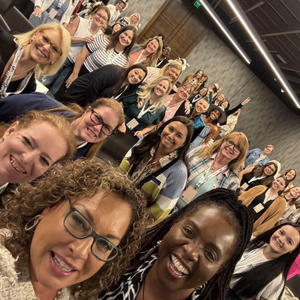
This is not a burnout session. It's a renewal session; built on the story of a woman who found her way back to purpose and brought practical tools with her. Attendees will leave with strategies for reconnecting with their goals, frameworks for evaluating which pressure deserves their energy, and the permission to believe that investing in themselves won't derail their careers. It will strengthen them. And for women ready to protect that renewed energy, Dara Koenig's session on avoiding burnout pairs naturally; one session to reignite the spark, the other to make sure it stays lit.
Remember that woman from the opening; the one meeting her goals, earning the promotions, building the career, while the excitement quietly disappeared? Stephanie was that woman. She isn't anymore. Not because she stopped being ambitious. Because she finally stopped long enough to remember what the ambition was for.
Join Stephanie Dean at the 2026 Women In Automotive Annual Conference, July 17–20 in Austin, TX, for "Ignite Your Spark: Rekindling Passion in Your Automotive Journey." Register today, and give yourself permission to remember what you've been working toward all along.