
From Survival Mode to Sales
How Adversity Shapes Stronger Women in Automotive
You never know what the person sitting across from you is carrying. The colleague who just crushed her quarterly number might be going home to a situation no one at work knows about. The woman who showed up polished and prepared for this morning's meeting might have spent last night wondering if she was safe. The leader you admire for how steady she seems might be holding everything together with white knuckles and sheer will and she's been doing it for years.
And maybe that woman is you. Maybe you're the one who has been showing up, performing, carrying something no one at work can see and wondering whether you're the only one.
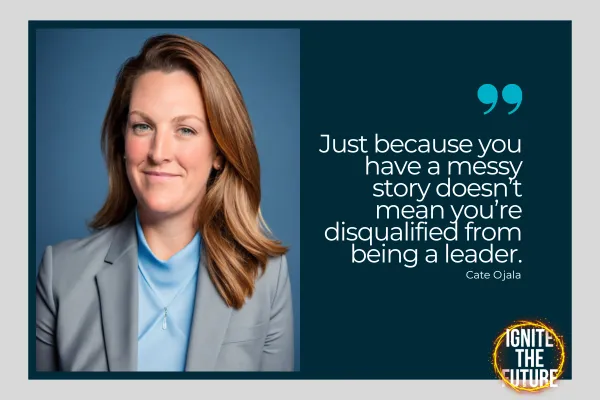
Cate Ojala knows what that looks like from the inside. As an Enterprise Account Executive at Mia Labs and a survivor of deeply personal trauma, Cate spent years keeping the hardest parts of her story out of her professional life. She showed up. She performed. She built a career in automotive sales that anyone would respect from the outside. And she carried the weight of what she was surviving in silence, convinced that a messy story would disqualify her from being taken seriously as a leader.
At the 2026 Women In Automotive® Annual Conference, July 17–20 in Austin, TX, Cate is stepping into that silence with a Breakout Session called "From Survival Mode to Sales Leader: How Trauma Built My Unshakeable Edge." It's not a session about reliving pain. It's a tactical playbook; built from lived experience about how adversity can teach you resilience, boundaries, process, and the kind of authenticity that makes you a stronger leader, not a weaker one.
Why She Almost Didn't Tell This Story
For years, Cate kept this part of her life private. The reasons were familiar to anyone who has ever carried something heavy while trying to build a career: embarrassment, fear of judgment, and the deeply held belief that showing vulnerability would cost her credibility.

The shift started at last year's Women In Automotive conference. During a keynote session, the conversation turned to the power of personal stories, the idea that our experiences, even the painful ones, are part of what makes us who we are as leaders. Something clicked for Cate. She realized that hiding her story wasn't protecting her career. It was limiting it.
"Just because someone has a messy story doesn't mean they're disqualified from being a leader," Cate said. That conviction is the foundation of everything she's bringing to the WIA stage and it's a message she knows many women in the room need to hear, even if they're not ready to say it out loud yet.
Diamonds Under Pressure
Cate doesn't romanticize what she's been through. She wouldn't wish her experience on anyone. But she's clear-eyed about what adversity taught her, and she refuses to let it be wasted.
"How are diamonds made?" she asked. "Through pressure. Adversity is that pressure." For Cate, surviving personal chaos fundamentally changed the way she approaches professional challenges. When you've faced moments where you didn't know if you were safe enough to wake up the next morning, a difficult client conversation or a lost deal carries a different weight. It doesn't disappear; it just doesn't break you the same way.
That shift in perspective is something Cate sees as one of the most underrecognized advantages women bring to high-performance environments. The adversity women navigate, personal trauma, systemic barriers, the daily pressure of proving credibility in male-dominated spaces, builds emotional intelligence, adaptability, and persistence that doesn't show up on a resume but shows up in every room they enter.
"If you can leverage your adversity, you'll be unstoppable," Cate said. Not because pain makes you better. Because what you learn surviving it; about yourself, about your capacity, about what actually matters becomes a tool no one can take from you.
A Tactical Playbook, Not Just a Trauma Story
Cate was intentional about how she framed her session, and the distinction matters. This is not a stage where she tells her story and asks for empathy. It's a working playbook built around the practical tools that helped her survive, rebuild, and continue performing at a high level while doing both.
"Everybody deals with trauma differently," she said. "Everybody reacts to trauma differently." She doesn't position her approach as the only way. She positions it as frameworks and mindset shifts that attendees can adapt to their own circumstances, whatever those circumstances look like.
That's an important nuance. Cate isn't standing on stage as someone who has it all figured out. She's offering what helped her keep moving forward on the days when moving forward felt impossible; whether that meant shutting down for a day to take a breath or recognizing that just showing up was enough. The playbook is honest about the mess because the mess is where the real tools get forged.
The Dangerous Myth of the "Strong Woman"
One of the most important threads in Cate's message pushes back against something women in automotive hear constantly the praise for being "strong." For handling everything. For never cracking. For showing up with a polished exterior no matter what's happening behind it.

Cate has lived that praise, and she knows what it costs. The expectation that women should absorb pressure silently and still perform flawlessly isn't strength. It's a recipe for burnout, isolation, and the slow erosion of the very identity you're trying to protect.
"It's okay to not be okay," Cate said. And she means it without cliché. Real strength, in her experience, isn't the absence of struggle. It's the willingness to be honest about the struggle while still choosing to move forward. That distinction between performing strength and practicing it is central to her session.
Why Your Confidence Can't Depend on Someone Else
The myth of the strong woman connects directly to something Cate sees playing out constantly in automotive: the tendency to anchor your confidence in external validation. A good quarter. A leader's praise. A paycheck that tells you the numbers say you're enough. Cate is honest about feeling this pull herself, she wants her leaders to recognize her work. Everyone does.
But she's learned the hard way what happens when that recognition disappears and your sense of self goes with it. "There is a need, especially for women in automotive, to be able to validate themselves," Cate said, "so that when you're not getting that validation, you're still able to walk the walk and show up and be at the table." In sales environments where your value is often reduced to a number, and in an industry where
women are still fighting for credibility, building an internal foundation isn't optional. It's what keeps you standing when everything external shifts.
Strategic Optimism, Not Rose-Colored Glasses
Cate draws a sharp line between toxic positivity and what she calls strategic optimism. In a culture that rewards relentless positivity, it's easy to confuse the two. But faking positivity, slapping an optimistic lens over pain without ever processing it, limits growth just as much as giving up does.
"Positivity should be a tool to learn and grow," she said. "You limit yourself if you're just fake about it." Strategic optimism means acknowledging what you're facing while choosing to find what's useful in it, being honest about a bad day without letting that day define your trajectory. It's not denial. It's discernment.

Boundaries Are Survival Tools
If adversity taught Cate one non-negotiable professional principle, it's this: showing up does not mean sacrificing yourself. Boundaries; around your time, your emotional energy, your capacity on any given day, aren't luxuries. They're what make sustainable performance possible.
"Showing up means showing up as the most authentic version of yourself that you can bring that day," Cate said, "and performing to the best of your ability, and knowing when you walk away that that was enough."
For women in automotive who are carrying more than their colleagues realize, and Cate believes that's far more women than anyone assumes, boundaries are what prevent the silent collapse that happens when performance outpaces the person behind it. Boundaries give those women permission to bring what they have that day without demanding they bring everything.
When Work Becomes the Coping Mechanism
Cate is candid about a pattern she recognizes in herself and in other high performers: the tendency to pour everything into work because work is the one thing that feels controllable. During her most difficult personal seasons, she was often performing at her professional best, not because she was thriving, but because achievement offered temporary relief from everything else.
She doesn't glorify this. "My therapist does not recommend that solution," she said with the kind of humor that only comes from honesty. But she names it because she knows other women will recognize it in themselves. The connection between survival and overperformance is real, and left unchecked, it leads directly to the burnout that boundaries are designed to prevent.
You Are Stronger Than You Realize
When asked what she hopes women recognize about themselves through her story, Cate's answer was immediate: "You are stronger than you realize you are." Then she paused, grinned, and added: "Mic drop."
That's Cate, direct, warm, and funny in the same breath, even when the subject matter is heavy. It's a phrase she picked up at Orange Theory, of all places, and it stuck because it kept proving true in contexts far beyond a workout. The capacity that surfaces during adversity, the ability to take one more breath, show up one more day, make one more decision when everything in you wants to stop, is rarely something people discover during comfort. It's revealed under pressure. And once you've seen it in yourself, no one can convince you it isn't there.
This is the core of what Cate wants every woman in her session to walk away knowing. Not that adversity is good. Not that suffering makes you special. But that whatever you've been through or are going through right now has not diminished your capacity for leadership. It may have built it in ways you haven't recognized yet.
A Session Built on Honesty
Cate designed her session to be practical, emotional, and deeply human. Attendees will leave with boundary-setting tools, resilience frameworks, and mindset shifts they can apply immediately, not someday, not once things calm down, but in the middle of whatever they're navigating right now.
"It does not cost you to be kind," Cate said. "And you never know what someone else is going up against." That compassion for others and for yourself is the thread that runs through everything she'll share on stage.
If you're a woman in automotive who has ever held everything together while quietly wondering how much longer you can keep going, Cate's message is simple: I see you. I've been there. And you don't have to do this alone.
You never know what someone is carrying. But you also never know what walking into the right room, at the right time, surrounded by the right women, can change.
Join Cate Ojala at the 2026 Women In Automotive Annual Conference, July 17–20 in Austin, TX, for "From Survival Mode to Sales Leader: How Trauma Built My Unshakeable Edge." Register today and walk into a room full of women who understand exactly what it takes to keep showing up.