How to Hire GOATs
Jennifer Sanford on the Leadership Skill No One Teaches
Jennifer Sanford still remembers the day she lost a team member she didn't want to lose. The kind of person who made everyone around them better — the kind of hire that comes along rarely. She was gutted. A former manager, sensing her frustration, offered a reframe she's carried with her ever since: the best hitters in baseball connect maybe three out of ten times at bat. Her average was far higher than that. She was building and keeping exceptional teams. She was going to lose people sometimes. What mattered was the process that found them in the first place.
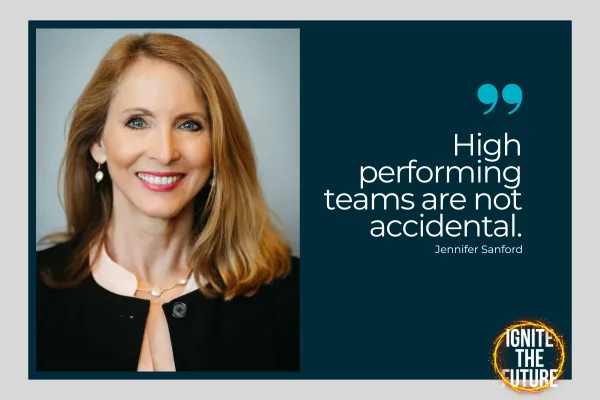
That process, refined, tested, and trusted over 30 years, is exactly what Jennifer is bringing to the 2026 Women In Automotive Annual Conference. As Vice President of Marketing and Enablement at automotiveMastermind, Jennifer has built and rebuilt teams across the automotive industry. Her Breakout Session, "How to Hire GOATs," isn't a theoretical leadership talk. It's a working session grounded in real-world hiring experience, designed for every woman in a leadership role who has ever wondered why her team keeps turning over or why her last hire didn't work out.
"It's really amazing when you have a good team, what that feels like," Jennifer said. And she wants more leaders to know that feeling not by luck, but by design.
You Were Probably Never Taught How to Do This
Here's the uncomfortable reality: most managers in automotive were never formally trained to hire. The industry has a well-documented pattern of promoting top individual performers into leadership roles; the strongest salesperson becomes the sales manager, the standout advisor becomes the service director, without ever bridging the gap between performing and leading. You know how to sell, but has anyone taught you how to build?
"They're never trained on it," Jennifer said. "And that's one of the things I've seen over and over again."

Jennifer knows this firsthand because she was the exception. Early in her career at Dominion Enterprises (formerly Trader Publishing Company), she encountered something rare: a company that actually invested in training its managers how to hire. The training department worked across every business line, and Jennifer committed to the process completely. She attended the hiring training twice, just to make sure she got it right. "I had never gotten much training in any of my prior jobs," she recalled. When she finally received it, the impact was immediate and lasting.
That experience shaped a conviction she's carried into every leadership role since: hiring failures are usually process failures, not people failures. If you're stuck in a cycle of turnover, the first place to look isn't your candidate pool. It's your process.
The Five-Minute Problem
Think about the last time you interviewed someone. How much time did you spend preparing? If the honest answer is five minutes; a quick skim of a resume before the candidate sat down, you're not alone. But Jennifer wants leaders to sit with what that says about how much they value the process that shapes their teams.
"If you can't be fully present in an interview, they're going to tell," she said. Candidates know when they're being evaluated by someone whose mind is still in their last meeting or already on the next task. That lack of presence doesn't just reduce the quality of the evaluation; it sends a signal about what the organization values.
Jennifer recommends a minimum of 15 to 20 minutes of genuine preparation: reviewing the candidate's resume, checking their LinkedIn profile, revisiting the job description, and thinking critically about what the team actually needs. Now, today, not what it needed six months ago. Not even the ideal candidate you imagined when you wrote the description. What it needs right now, given the people already on it and the goals in front of you.
"Even though I went to a lot of trouble to get the job description approved and got everybody on board," Jennifer admitted that sometimes, "as I start interviewing people, I realize maybe I had that (the job description) wrong." That willingness to adjust, to let the process teach you something rather than just confirm your assumptions, is part of what separates thoughtful hiring from reflexive hiring.
Why Your Instincts Keep Giving You the Same Results
You've hired someone who felt right in the interview and fell apart within 90 days. You've passed on a candidate who looked wrong on paper but probably would have been exactly what the team needed. You've built a team that looks a lot like you, same energy, same communication style, same blind spots, and wondered why the same problems keep surfacing.
Jennifer has seen these patterns across the industry, and her diagnosis is direct: without a structured system, hiring becomes repetitive guesswork. Managers hire emotionally, hire reactively, or hire versions of themselves. The pattern repeats because the process never changes.
Her antidote is the same rubric she's relied on for three decades. It's built on a straightforward principle: identify what the role requires, develop interview questions tied to those requirements, and ask every candidate the same set of questions. "It takes you completely away from the emotional process of hiring that most people fall into," she explained, "and puts you into the objective process."
That structure doesn't replace judgment; it sharpens it. Jennifer pays close attention to how candidates respond, not just what they say. A sales candidate should demonstrate drive and influence. An administrative hire should show conscientiousness and efficiency. The rubric creates the framework; the interviewer's experience fills in the nuance. And sometimes, the answers aren't in the answers at all, they're in the way a person tells their story.
One Interview Is Never Enough

Jennifer is a firm advocate for multiple interviews, and she's specific about why. People present differently across interactions. A single conversation captures one version of a candidate. Over multiple touchpoints, inconsistencies surface, authenticity becomes clearer, and both sides get a more honest picture of whether the fit is real.
For customer-facing roles, Jennifer recommends at least two in-person meetings before extending an offer. For remote teams, multiple virtual conversations serve the same purpose. Her advice on what to watch for? Inconsistencies.
"If you get too many opposing responses from the same person," she explained to me, "you start to find the truth and what that person is really like."
This works in both directions. Candidates are evaluating you across those touchpoints, too. A well-run, multi-stage process signals that a company takes its culture seriously, and that signal is exactly what attracts the kind of people you actually want on your team.
What Happens When It Works
When the process is right, you know it fast. Jennifer describes GOAT hires as people who engage almost immediately; asking thoughtful questions during onboarding,
offering observations and suggestions within their first weeks, and building trust naturally rather than waiting for permission. "The best hires I've had start making recommendations almost out of the gate," she said. "They're already in a trust mode with the organization."
That early engagement isn't personality. It's the product of a match, the right person in the right role, within a culture that was honest about what it is. GOATs don't just adapt to a team. They elevate it.
When the Real Problem Isn't Who You're Hiring
Jennifer is also candid about a harder truth that many leaders resist: sometimes turnover isn't a hiring problem at all. "Maybe you are hiring well, and you got some bad apples already on the team that are chasing them away," she acknowledged. If strong new hires keep leaving, the question to ask yourself isn't whether your process failed. It's whether your environment is healthy enough to keep the right people.

This is where Jennifer's philosophy expands beyond hiring into something bigger: building teams that develop and sustain themselves. She encourages leaders to involve their rising talent in the interview process, not for an extra opinion, but as a deliberate act of development and trust. When you ask a team member to participate in evaluating a new hire, you're telling them their perspective matters. You're teaching them a skill most managers never learn. And you're creating what Jennifer calls "team glue" the kind of shared investment that holds people together when things get hard.
"Whenever you entrust somebody like that, it's a point of pride," she said. "They're willing to teach me something." Hiring, done well, becomes more than talent acquisition. It has become a cultural development.
Building the Team You Actually Need
Jennifer's career has taught her something that sounds simple but runs counter to how most managers operate: the strongest teams are intentionally diverse, and not just for representation. For performance.
She once walked into a team of talented women, all in their mid-thirties, all strong performers and immediately recognized that the team needed different perspectives to reach its full potential. Different ages, different backgrounds, different experiences. "I probably needed a dude in there," she said with characteristic directness. Over time, they got there, and the team was stronger for it.
"A lot of people are tempted to hire themselves," Jennifer observed. Without a structured process, that's the default; gravitating toward candidates who feel familiar, who communicate the way you do, who share your instincts. It feels like good hiring. It's actually a shortcut that leads to redundancy, groupthink, and eventually conflict.
For women in automotive who are building or reshaping teams, this is an especially powerful insight. Your difference is your strength and that principle applies not just to your own career, but to every hire you make. The goal isn't a team that mirrors you. It's a team that complements you, challenges you, and brings what you can't.

A Session Built for the Way You Actually Work
Jennifer designed her session to be practical, applicable, and grounded in the realities of leading in automotive, whether you're managing a sales floor, a service drive, a BDC, or a corporate team. Attendees will leave with a framework for interviewing more intentionally, evaluating more objectively, and identifying the hires who won't just fill a role but strengthen a team.
"It's not sexy," Jennifer said of the topic, with the kind of self-awareness that makes her advice land. "But I hope people come."
They should. Because every manager wants a high-performing team, and high-performing teams are never accidental. They're built through intentional hiring, consistent process, and the kind of leadership that treats every open role as an opportunity to raise the bar.
Jennifer Sanford's Breakout Session at the 2026 Women In Automotive Annual Conference is that opportunity for your team, and for your own growth as a leader. Join Jennifer, and join a community of women who are redefining what leadership looks like in automotive. Register for the 2026 WIA Annual Conference today.