Facilities Leadership in Automotive
Shawnee Lavy on the Role That Keeps Dealerships Running
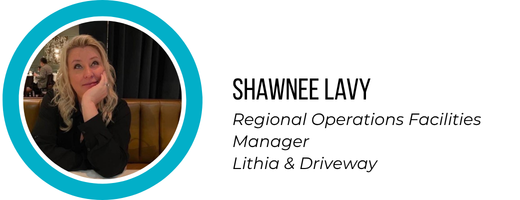
If Shawnee Lavy does her job well, you'll never know she exists.
That's the nature of facilities leadership. When everything works, the temperature is comfortable, the roof doesn't leak, the lifts operate safely, the parking lot is smooth, no one thinks about the team behind it. Customers focus on their purchase. Employees focus on their work. General managers focus on their people.
And Shawnee watches the weather across the eastern United States, tracking hurricanes in Florida, tornadoes in Tennessee, ice storms in the Northeast, ready to respond when disaster doesn't wait for business hours.
"In facilities, if all is going well, you don't know we're there," Shawnee explains. "And that's the goal."
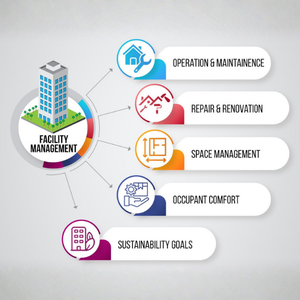
As Regional Operational Facility Manager at Lithia & Driveway, Shawnee oversees more than 100 locations. Her work spans everything from HVAC systems to fire protection, roof repairs to parking lot maintenance, environmental compliance to emergency response. It's a career path that rarely appears when people think about automotive, and one that's essential to everything else functioning.
"The last thing our general managers need to be worrying about is a roof leak on top of a car," she says, "or in a sales office where a customer is sitting there trying to make a deal."
A Path That Started Outside Automotive
Shawnee didn't plan a career in automotive. She started in fire protection, working in her family's business. When they sold the company, she moved into corporate work focused on facility safety and compliance.
The pivot came through a late-night conversation with a client. He was working double duty, filling two roles. She asked if there was an opening. He said yes. That single question launched her into facilities management, and eventually into automotive.
She worked for Carvana during the pandemic, managing facilities remotely. On a work trip to Nashville, she called her husband, a John Deere mechanic, so she knows the service side intimately, with a simple statement: "I want to move to Nashville." He said okay.
They sold everything and built a house in Tennessee. Then Carvana required employees to return to Phoenix. Already deep into a cross-country move, Shawnee resigned and posted on LinkedIn that she was leaving on good terms.
A leader at Lithia Motors saw the post. A few conversations later, Shawnee had a new role, and a career in automotive dealership facilities.
What People Misunderstand About Buildings
There's a common assumption that buildings simply maintain themselves. Shawnee knows better.
"People bring life to buildings," she explains. "When there isn't that energy, things can go south really quick. At the same time, people are the reason things go wrong, not maintaining things, not paying attention."
Without constant oversight, systems fail. Roofs leak. HVAC units break down. Safety hazards emerge. The work is invisible until something goes wrong.
"People don't realize that even when we're off the clock, we're really on the clock," Shawnee says. "The phone never goes off because disaster doesn't wait for eight to five Monday through Friday."

The stakes are higher than most people recognize. Vehicle purchases are second only to home purchases in terms of financial commitment. When customers walk into a dealership, they're making judgments, consciously or not, about whether they can trust this business with that kind of money.
"If they're looking around thinking, 'This place doesn't take care of their own building,' how can they trust that what they're buying is a sound purchase?"
She tells the story of a Rolls Royce dealership with a stubborn roof leak. Even after the leak was finally fixed, the work wasn't done, stained ceiling tiles had to be replaced. Perception matters.
"You're looking at a $5 million car and there are stained ceiling tiles above you. That trust is instantly diminished."
The Spidey Senses of Facilities Leadership
When Shawnee walks into a new acquisition, she's reading the space with all five senses.
She looks up, always up, scanning for water stains, checking fire protection systems, noting ceiling tiles that don't sit right. She checks the temperature; she can tell you exactly what a room feels like the moment she walks in. She examines parking lots, flooring for trip hazards, bathrooms for fixture quality, service bays for oil on the floor.
Then she climbs to the roof. Opens the HVAC units. Checks whether filters have been changed, because if filters aren't being changed, belts aren't being replaced, and coils aren't being cleaned.
"And smell," she adds. "Whether it's people burning candles, a gas leak, mildew, smell affects people more than they realize."
Sound matters too. At one acquisition, she was talking with the service manager when she heard a lift make a noise it shouldn't make.
"I turned around and went, 'Nope.' We locked it down right then and there."
Taking a bay out of service is significant; 10% of service availability, gone. But a faulty lift is a safety issue that doesn't wait for convenience.
From Manager to Leader
Early in her career, Shawnee was excellent on paper. Her stats were strong. She got things done. She didn't realize people didn't actually like working with her.
"I was managing by fear," she admits. "And I didn't mean to. I'm not a mean person. When people got to know me outside of work, they'd say, 'Wow, I didn't know you were this nice.' It wasn't that I was a screamer. I was just very by the book, we've got to get this done, get this done, and get out of here."
The transformation came through a leadership course, and a concept called the ladder of inference: when you know what needs to happen, you run straight to the top, making decisions, driving outcomes, without realizing you're leaving everyone else behind. People become afraid to share their opinions. You miss information. You think you know everything already.
"When I heard that parable, I was like, 'Oh my gosh, that is me,'" Shawnee recalls. "And I literally saw it in myself in the class."
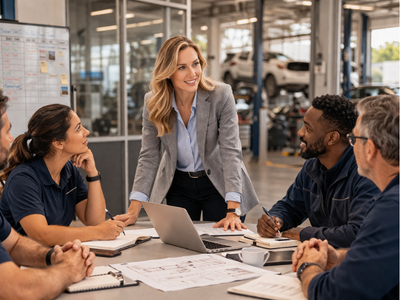
She started watching body language. Paying attention to whether people were actually engaged. The self-awareness couldn't be undone.
"Once you realize that, you can't go back. You can't sit in a room and not be self-aware once you figure that out."
The shift changed everything. Instead of telling people what they needed to do, she started asking one question that transformed her leadership: "What do you need from me?"
Not dictating. Not directing. Asking.
"Where can I contribute more where I'm not?" she adds. "That's really the question."
Now when she visits stores, her goal is simple: she wants people to be happy to see her, not thinking "Oh gosh, corporate's here."
"I'm here to support you. You're my customer."
Fix the Problem, Fix the Cause
Shawnee's approach to problem-solving starts at the end and works backward. Most people start at the beginning and move forward. She finds that inefficient.
"We know something went wrong here," she explains. "Let's walk it back instead of spending time on when it was right."
She tells the story of a three-story building where the second floor was freezing and the third floor was hot. For months, HVAC technicians couldn't figure it out. They examined air handlers, installed timers, analyzed when units kicked in. Everyone concluded it was just the building's configuration.
One day, Shawnee sat in a conference room and asked a simple question: "Has anybody popped a ceiling tile in here?"
They all looked at each other. She found a ladder, climbed up in her heels and skirt, and started lifting tiles. The ductwork, large enough to crawl into, was completely ripped apart.
"Everybody was overthinking it. The experts were overthinking it. And I knew just enough to ask a question: make it make sense to me."
The problem had existed for two years. The solution took one afternoon.
It's a principle that applies far beyond facilities: sometimes the answer isn't more expertise, it's stepping back far enough to see what everyone else is missing.
A Minority Within a Minority
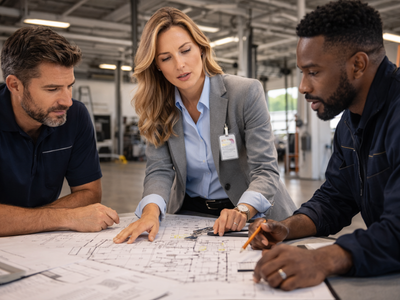
Shawnee is direct about something readers should know: women are a minority in facilities work, not just in automotive.
During the ceiling tile story, she was the only woman in the room full of technical experts. That's not unusual. Throughout her career, she's navigated being the outsider in spaces where her presence wasn't expected.
She shares another story, one that still carries weight in her voice.
She'd identified a recurring problem: a vendor's housekeeping team kept breaking expensive light ballasts when changing bulbs. She'd spent tens of thousands of dollars replacing fixtures. She knew the cause. But she felt like she wasn't being heard, getting the "head pat," as she describes it.
Finally, in a meeting with the vendor and her peers, she turned to a male colleague and asked if he'd had the same problem. He had, and when his team trained the housekeepers properly, it stopped.
"In that room full of men, I'd been having the same conversation for six months," Shawnee says. "What's the difference between what I'm saying and what my peer is saying?"
The room went quiet. The problem got fixed. But the experience left a mark.
"It hurts. We're both doing the same job. We both have the experience. We're working for the same company. Why did you fix it in his area and deny it in mine?"
She doesn't default to assuming gender is the issue, sometimes others have to point it out to her. But when it happens, she returns to humility: understanding the other person's perspective, figuring out what she can do to earn that respect, and moving forward.
The Vision: "We've Got You"
When Shawnee looks at the future of facilities leadership in automotive, her vision is clear.
"If we can tell the people working in the stores, 'We've got you', just focus on what you need to do and your business goals, I think that takes us a long way."
The goal is for dealership teams to trust facilities leadership completely, to hand over the building concerns and focus entirely on customers and employees.
"We have to show them they can trust us," Shawnee says. "We know what we're doing. They can give up that control and focus on their people and their customers, and let us take care of their buildings for them."
It's facilities as strategic partner, not just maintenance crew. And it requires building relationships, with stores, with OEMs, with vendors, so that when something breaks at 2 AM, the response is seamless.

Beyond the Building: Community
There's another dimension to Shawnee's leadership that she wishes more people talked about: community involvement.
She's wearing her Fire and Ice Polar Plunge sweatshirt during the interview, the annual event that raises money for Special Olympics, where Lithia is heavily involved. The money goes directly to athletes, not just the organization.
"I think getting involved in community relations on behalf of your company is huge," she says. "Especially in an industry like ours, where it takes community trust. They're not just buying bananas from us, they're making huge financial commitments."
Her advice for anyone wondering where to start: find what resonates with your heart.
"My sister had lymphoma when she was little, so my family's been very active with the Leukemia and Lymphoma Society," Shawnee shares. "Find a cause you can get passionate about, because you're not going to go very deep into it if you're not. Then go all in."
A Career You Didn't Know Existed
Facilities leadership represents one of the many career paths inside automotive that rarely gets discussed. For women interested in the industry but not drawn to traditional dealership roles, facilities offers opportunities in operations management, property management, safety and compliance, construction and renovations, infrastructure planning.
It's demanding work; 24/7 availability, weather tracking across time zones, constant problem-solving. But it's also work that touches every part of the business, even when no one notices.
"When you're an employee and you come to work and there's something dripping on your desk, or you're walking around a bucket collecting water, or dealing with a faulty outlet, you're going to be frustrated," Shawnee observes. "And you'll carry that to your interactions with customers."
When facilities works, everyone else can focus on what they do best. That's the whole point.
"The green behind the green curtain," Shawnee calls it. The invisible work that makes everything else possible.
This article is part of Women In Automotive's series exploring nontraditional career paths in the industry. Ready to discover roles you never knew existed? Join the WIA community—because automotive is far bigger than most people realize, and there's a place here for you.