Automotive Leadership and Culture
How Jennifer Ellestad Builds Teams That Win

The guys in the shop told Jennifer Ellestad it wasn't fair.
She got to work inside the Jiffy Lube with air conditioning, chatting with customers. They were outside in Wisconsin's ninety-degree summers, sweating under the hoods of hot cars. And they bet her she couldn't learn to work on vehicles anyway.
Jennifer took the bet, and raised the stakes.
"Not only will I learn to work on cars," she told them, "but I'll bet you in six months I'll be your boss."
She was.
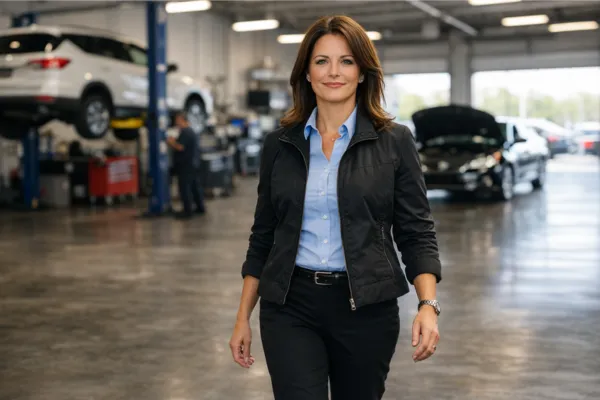
That was twenty-seven years ago. Jennifer had been studying vocal performance at the University of Wisconsin-Madison, training to become a professional opera singer. The cashier job was supposed to be something easy while she finished her senior year. The opera stage never happened. But Jennifer found a different stage, one in front of automotive technicians, young people entering the trades, and teams she's built and transformed across nearly three decades in fixed operations.
"I fell in love with the people and I fell in love with the industry along the way," she says. "So I did everything I could to learn everything I could."
The Team Behind Every Win
That first Jiffy Lube crew taught Jennifer something she's carried through every leadership role since: success depends on the team behind the work.
"If you have the right people doing the right things, it's a win," she explains. "It's always going to be a win for the company, for the customers, and for the people that work there."
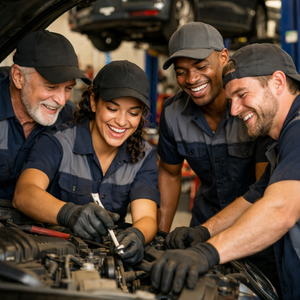
That team-first mentality became her foundation. Every store she's led, every culture she's transformed, every apprenticeship program she's built—all of it traces back to a group of young people in their early twenties, covered in oil, having fun even when the work wasn't glamorous.
What the Industry Gets Wrong About Talent
Jennifer has watched automotive respond to technician shortages with a familiar playbook: higher pay, aggressive compensation plans, signing bonuses. She doesn't dismiss the importance of fair compensation, these jobs absolutely deserve strong pay.
But she's convinced the industry is missing what people actually want.
"That's not what people are looking for anymore," she says. "The biggest things I've seen is there has to be solid onboarding, but it's so much more than that. It's real training for the job. It's not just throwing someone into the fire, which our industry is kind of known for."
The gaps are structural: no defined career paths, no mentorship systems, no plan for what happens after someone has been a technician for twenty or thirty years and the physical demands become unsustainable.
"Why aren't we looking at our technicians who are maybe five to ten years from retirement and figuring out how to capture their quarter of a century of knowledge before letting it walk out the door?"
Jennifer used to keep a sign behind her computer: "The way we've always done it is not allowed to be spoken in my office."
"It's not about fixing it," she clarifies. "It's about creating a whole new atmosphere for the automotive workplace. It's got to change or we're going to be left behind."
Start with Two Questions
When Jennifer enters a new store, her first move is deceptively simple: sit down with every employee and ask two questions.
What do you like about working here? What do you not like?
"If you have good people that are going to give you honest answers, you're going to learn a lot," she says. "But the key is you have to do something."
She's watched managers collect feedback and then freeze; overwhelmed by the volume and paralyzed by the scope of change required. Jennifer's advice: find the low-hanging fruit.
"What's the thing you can change tomorrow, even if it's so much as where the paperwork is filed? Change it to a different file cabinet. Do it in alphabetical order instead of numeric. Whatever that is, make that little change that makes somebody's life easier, and your team will get on board."
Transformation doesn't require grand gestures. It requires consistent, visible responsiveness. Step by step. Small changes every day, every week, every month, until the culture has shifted entirely.
Build Your Think Tank
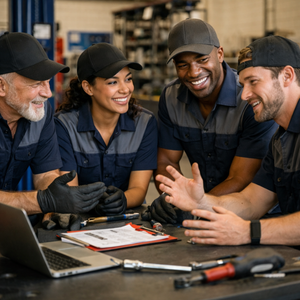
Some of the best ideas Jennifer has implemented didn't come from her own brain. They emerged from collaborative sessions with the people doing the actual work.
Her method: bring together technicians who have ideas and experience. Talk through the problem. Weigh pros and cons openly. Then, and this is crucial, give everyone time to step away and reflect before reconvening.
"Some of the bigger changes I've made have been—I'm not a proponent of meetings to death—but let's talk about it. Bring me your pros and cons. Now let's go back and think about it for a couple of days and do it again. Because those ideas just keep coming."
The result? When changes finally roll out, nobody needs convincing.
"Everybody's on board. You don't have to sell your idea because it was a collaborative effort that everybody wants to see happen and are super excited to get moving."
For employees navigating resistant leadership, Jennifer offers tactical advice: don't just bring problems, bring solutions, and frame them as shared wins.
"I'm not gonna go to my manager and complain about X. I'm gonna go with ideas that fix X," she explains. "Here's my solution. Here's how it's going to help not just me, but everyone, including you as a leader. Let's solve this problem together."
That framing changes everything. Ideas presented as collaborative wins get traction. Complaints dropped in the suggestion box get ignored.
Before You Recruit Women, Evaluate Your Environment
Jennifer challenges leaders who say they want more women in their dealerships to ask harder questions first.
"Before I go welcoming anybody in the door, I'm not going to set up anyone unless I believe they are 100% capable of being as successful as they want to be," she says. "You've got to look at what you've got and make sure you've created the environment for their success."
Her diagnostic starts with a question many leaders overlook: How do your female customers feel?
"Do your women customers feel comfortable? Are they confident in bringing their vehicles in? Are they confident in working with your advisors? Confident in your technicians' recommendations?" she asks. "If you can't figure it out on the inside, start there. Check those boxes first, then look at that interior structure."
For the workshop itself, she offers a concrete example: locker rooms.
"You want female technicians. How many changing rooms do you have? Do you have a male and a female locker room? And I don't mean slapping a sign on the extra stall in the customer bathroom and throwing a locker in it."
When Jennifer recruits young women interested in becoming technicians, locker rooms are the first question they ask. They want to know if the workplace is genuinely inclusive, equal and fair, or if they'll be navigating makeshift accommodations.
"Do you have an existing staff who's going to welcome them in and lean into their success instead of trying to keep them from being successful?"
Her message: create the environment first. When the workplace is genuinely welcoming, women will come naturally, and they'll succeed.
"The more successful women you have in your dealership, I guarantee you, the more successful women you're going to have. People are going to want to join your team."
Programs That Never Stop Evolving
Jennifer has built apprenticeship and career path programs that don't just bring young people into the industry, they transform culture from the inside.
The old dynamic dissolves: no more "that's the senior technician, don't bother him." In its place, veterans actively pass on knowledge, celebrating apprentices' certifications and wins as if they were their own.
"It's not 'we'll see how long the new guy lasts.' It's 'I want to help him get to flat rate. I want to see him earn his ASEs. I want to see him earn his manufacturer training certificates.'"
The ripple effects extend beyond entry-level retention. Jennifer has seen technicians who planned to retire five years ago still going strong in educator positions, with zero intention of leaving.
"They've found a new life taking that knowledge and being able to pass it on. They feel valued, seen."
But she's clear: these programs can never be "set in stone."
"It started with an idea and a little bit of hope and a prayer. Every month, every year, it evolved, OK, it's good, how can we make it better?" she explains. "We look at every new car model and say, 'I need to learn this new technology.' We have to apply that same fervor to our people. If you're not looking to continuously improve your culture, it's just going to go stale."
Your Place Is Wherever You Want It to Be
Jennifer was once denied a promotion she badly wanted. When she asked why, the answer was blunt: she thought too much for herself. They wanted someone who would do as they were told.
She took that as her cue to keep thinking.
"My thinking outside the box is what's gotten me to where I am," she reflects. "It's created some of the most rewarding and significant things in my career."
Her message to women considering automotive is direct:
"Your place in this industry is wherever the hell you want it to be, and your potential is limitless. Don't let anyone intimidate you, because I guarantee you are perfectly capable, if not more capable, of doing any single thing you set your mind to."
Why She's Still Here
It's not the cars.
"Cars are great. Cars are cool. I love cars," Jennifer admits. "But I don't have a passion for cars. I have a passion for people."
In an era of AI and automation, automotive remains one of the few industries that still requires genuine human connection. Someone has to build trust with the customer. Someone has to mentor the next technician. The friendships and colleagues Jennifer has worked alongside for twenty-seven years, that's what keeps her coming back.
"If you've got people that feel good about what they do, you are definitely going to have customers that feel good about what they get. And that's the key."
A cashier at a Jiffy Lube once bet she could become the boss in six months. She won, and then spent nearly three decades proving that automotive isn't a mechanical industry at all.
It's a people industry. And when leaders finally understand that, everything changes.
Ready to connect with women who are building, leading, and transforming automotive? Join the Women In Automotive community and discover what's possible when people come first.