

"There's Always a First of the Month"
Marjie Smith on Resilience, Resourcefulness, and Redefining Leadership in Automotive
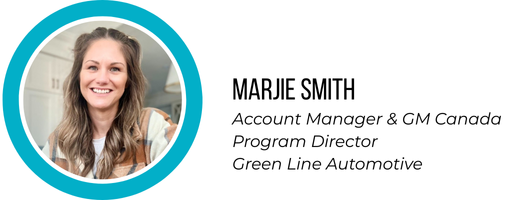
When Marjie Smith landed at Ulmer Chevrolet answering phones for $2,800 a month, automotive wasn't calling her name. Her husband had relocated, she needed a job, and that was that.
"Not even a little bit," she laughs when asked if she entered automotive intentionally.
But Dealer Principal Ross Ulmer saw something. He invested time in her growth, recognized her wins, and created space for her to develop. What started as necessity became opportunity—a career path she'd build through curiosity, grit, and the rhythm of automotive retail.

"I realized that's what I really enjoyed—hitting all of those markers and getting praise for it," Marjie says. "And there was a lot of that in automotive. Every month you get to do it again."
That monthly reset would become both the challenge and the gift of her career.
Boot Camp in the Dealership
Those five to six years inside the dealership weren't just job experience—they were her foundation. She learned the internal KPIs, understood what drove general managers and GSMs, and developed fluency in dealership operations.
"It's like boot camp," she explains. "You start to understand what everybody needs and what their internal KPIs are."
Now, as Account Manager and GM Canada Program Director at Green Line, she can read analytics, translate data into meaningful conversations, and speak directly to what matters to dealership leaders—not because she studied it, but because she lived it.
"I went to school for advertising. I get it," she says. "But to be able to take that data and turn it into a conversation with a GM, with a GSM—that's the part I really like. Without that dealership experience, I just frankly wouldn't be remotely where I am today."
She's having conversations about why data points matter, how they produce leads, and what closing at 20% really means. It's the difference between knowing your product and understanding your customer's world.
The Question That Stayed With Her
Early in her career, Marjie attended a Women In Automotive conference in Toronto. Young, eager, and ready to chart her path, she asked a panel of female Dealer Principals a simple question: What other career opportunities exist in automotive?
The response was deflating. "There isn't," they told her. "All you can do is marketing."
The message was clear: her options were limited, her ceiling visible.
But then something unexpected happened. A woman named Kathy noticed Marjie's disappointment. She approached her, tapped her shoulder, and said words Marjie still carries with her: "It's all good. There's tons of opportunity out there for you."
"She was completely random," Marjie recalls. "But she took the time because she noticed I was so disappointed. That moment is a very personal question to me because I was told there was nowhere else to go."
Kathy was right. The opportunities existed, Marjie just hadn't seen them yet. The vendor ecosystem was vast and growing: AI solutions, over-the-top advertising, customer data platforms, chatbots, cybersecurity, OEM strategy, analytics. Roles in marketing, retention, customer experience, email strategy, data ownership, and lifecycle management. Opportunities to rise from the dealership floor to leadership positions, even buying into dealer groups.
Today, when Marjie talks to women considering automotive careers, she makes sure they know what she didn't back then: the industry is far bigger than the showroom floor, and your ceiling is higher than anyone might tell you it is.

The Skills That Actually Matter
Ask Marjie what skills proved most valuable, and she won't start with technical expertise. She leads with resourcefulness and resilience.
"Don't be scared to ask," she says. "I grew up in the late 90s, early 2000s, and I was raised to be a people pleaser. We've been taught to not look weak, to be polite and appease everybody. We get scared to ask questions or raise our hand because we don't want to be the dumbest person in the room."
Resourcefulness means finding people who can drive change in your day—including making friends with the IT person, asking the questions no one else is asking, using facts over feelings.
"Think of it like baseball," Marjie advises. "It's a game of failure when you're batting. It can be very intimidating when the big bad dealer gets on the phone and you want to appease them. But you have to use your resourcefulness and walk through all of those steps."
Five years ago, she'd pick up a call with a GM already feeling defensive. Not anymore.
"I'm not scared to get shot out of the room because I'm female anymore," she says. "I'm much more confident in my voice and what I'm saying."
Thinking Beyond the Dealership
Moving from dealership marketing to vendor work required more than learning new systems—it demanded a complete perspective shift.
In the dealership, everything was community-driven, siloed, focused on individual KPIs. At larger vendors like Pure Cars, she had to think about company objectives, bottom-line revenue, and how losses in one area might be offset elsewhere.
"It was taking a step back and not looking at it with dealership tunnel vision," she explains. "There were company objectives now."
She jokes about needing to "call the adults to the table" when facing bigger strategic decisions at Green Line. But that humility—that willingness to acknowledge what she doesn't know and bring in expertise—is exactly what good leadership looks like.

Recognition and What It Really Means
When Marjie was named to the 40 Under 40 list in an industry still heavily male-dominated, she didn't frame it as personal validation. She thought about her kids—especially her two daughters.
"The magazine came printed with my picture and all the other people's pictures, and I'm like, there is a day that my daughters are going to get that, and that matters," she says. "It's because I have little girls watching everything that I do and every mistake I make, and how I fix them and own it."
The recognition also opened doors to mentorship opportunities, something she deeply values but admits she's missing now that she's back in account management rather than supervising teams.
"That's one of the biggest things I'm missing now," she reflects. "I spent so long supervising and managing people, and I kind of lost that touch—being able to help bring somebody up."
But her presence, her visibility, and her willingness to share her story are forms of mentorship too. Every woman watching Marjie lead with confidence and authenticity is learning that there's more than one way to succeed in this industry.
You Don't Have to Be Tough as Nails
For years, Marjie believed there was only one archetype for women succeeding in automotive: the hard-ass. The woman who wore all black and matched the energy in the room by hardening herself.
"The only female GM I knew was a hard-ass," Marjie remembers. "She played the role."
But something has shifted.
"We don't have to be tough as nails anymore," she says firmly. "I don't want women to feel like that. It's OK to wear your bright colors and feel how you want to feel. Bring that confidence to the table and put it in your work. You'll see it in your output."
Yes, old-school dealers still exist. She's experienced moments where she's had to tag in her male director to have the same conversation. But those moments are becoming the exception, not the norm.
The industry is maturing. Women are complementing, not competing with, their male colleagues. And leadership is being redefined by people who show up authentically.
Hidden Career Lanes Worth Exploring
When women tell Marjie they're interested in automotive but know they don't want sales or service, she has answers ready.
Service advisor is always a solid starting point for learning how a dealership makes money. BDC roles offer valuable customer insight and teach resilience fast. Customer retention and customer experience roles—often tucked into administrative teams—open doors to email marketing, data ownership, and becoming responsible for retention numbers at 12 and 18 months.
"The minute you can understand your customers, all of the jobs in a dealership get easier," she notes.
Marketing remains a strong path, but Marjie emphasizes transferable skills. Work in BDC while studying cybersecurity, and suddenly you have dealership fluency plus technical expertise. The combinations are limitless for those willing to be curious and strategic.
And beyond the dealership? The vendor ecosystem is vast. She reminds women that there are entire companies built around solving automotive-specific challenges—companies where you can work in marketing, tech, analytics, customer intelligence, or strategy while staying connected to the industry.
The Culture That Changed Everything
When Marjie joined Green Line, something unexpected happened. The company's transparency, ethical practices, and commitment to genuinely serving their clients—not holding AdWords accounts hostage, having search specialists join client calls, treating dealers as true partners—fundamentally shifted how she showed up in her work.
"It's completely shifted my mentality, my sense of self-appreciation and confidence," she says. "They stood behind me from day one. Having that has allowed me to reach out when I saw the call for WIA stories. I never would have done that even six months ago."
The culture change made her a better mom because she's less worried and high-strung. It made her more confident in her product because she genuinely believes in it. It unlocked potential she didn't know she had.
"I was unaware that there was so much more I could give and do and want to do," she reflects. "It's been such a blessing."
Good culture doesn't just improve retention metrics or employee satisfaction scores. It transforms what people believe is possible for themselves.

Hang On—Don't Let Go Yet
For women who love this industry but haven't yet found where they fit, Marjie's advice is simple and profound: "Just hang on. Don't let go yet. There's always a first of the month."
Month-end will come again. Incentives will roll out. You'll get a new shot at trying a different approach. You're not married to how you're doing something today—you can shift, challenge yourself, find new segments that interest you, even if no one else is pushing you to grow.
"If you're not being challenged from above, find ways to push yourself in those little segments that interest you, because they all exist," Marjie says.
She never imagined she'd enjoy OEM work. But it turned out networking was fun, building relationships mattered, and yes, there's billing and administrative stuff, but there's always stuff. You find where the joy lives and you lean into that.
The monthly rhythm of automotive—the very thing that intimidated her when she first started answering phones for $2,800 a month—has become the gift. Every month is a reset. Every first of the month is permission to begin again, to try differently, to grow into the leader you're becoming.
Marjie Smith didn't plan to build a career in automotive. But she's built one anyway—through curiosity, resourcefulness, resilience, and a willingness to keep showing up, month after month, learning what's possible.
Women In Automotive is a community dedicated to empowering women across all sectors of the automotive industry. Whether you're in sales, service, marketing, technology, finance, or leadership, WIA provides resources, networking, and support to help you thrive. Learn more at womeninautomotive.com.