Building Something from Nothing
Amanda Hoffmann's Story of Resilience and Leadership

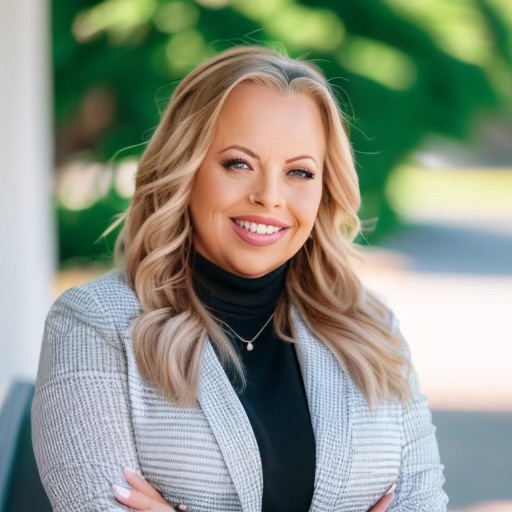
When Amanda Hoffmann walked back into retail automotive after years in fintech and SaaS, she faced an uncomfortable question: Was this a step backward, or something else entirely?
She'd spent years building expertise in corporate structure, process optimization, and strategic enablement. Now she was back at Riverhead Toyota with an opportunity to build a pre-owned acquisition department from absolute scratch—no established process, no precedent, no roadmap.
The tension between perceived regression and genuine opportunity was real. But Amanda made a choice: She chose to build instead of retreat.

Building Structure When Nothing Exists
Creating a department where none existed meant simultaneously constructing infrastructure and earning trust. Just a blank slate and the expectation that she'd figure it out.
Building from scratch requires embracing uncertainty as fundamental rather than problematic. Amanda navigated questions without answers, made decisions without precedent, and learned to trust her instincts when data didn't exist.
What made the difference was her willingness to lead with empathy while maintaining clear expectations. Resistance to change wasn't always about the change itself—sometimes it was fear, ego, or not understanding the bigger picture.
"There's a big difference between a knowing problem and a doing problem," Amanda reflects. Was someone resisting because they genuinely didn't understand, or were they digging in their heels for other reasons? The answer shaped her approach every time.
Skills That Travel Across Industries
Amanda's career reads like a masterclass in transferable skills. From retail to fintech to SaaS to enablement and training, she moved through industries that seemed disparate but shared fundamental truths about what drives success.
Adaptability became her currency—the ability to walk into a new environment, assess what wasn't working, and envision what could be better. So did communication: translating complex ideas into actionable steps, speaking the language of operations while understanding the heartbeat of customer experience.

Most importantly, she carried empathy across every transition. Each industry gave her something new: corporate structure taught her documented processes, fintech showed her strategic customer journey thinking, SaaS gave her insights into scalability. Now, in automotive retail, she's weaving it all together into something greater than the sum of its parts.
When Setbacks Become Setup
The layoff blindsided her. After years of building programs and driving results, Amanda was told the company no longer saw her value. The rejection cut deep, it felt like a fundamental misreading of who she was.
"Oh my God, I'm nothing," the voice whispered in her quieter moments. The confidence she'd built over years seemed to crumble.
Then came the reframing. A simple analogy became her north star: A bottle of water costs ten cents at Costco and eight dollars at the airport. The water hasn't changed, only the environment has.
"It may not be you," Amanda realized. "You may just be in the wrong space with the wrong people at the wrong time."
This perspective shift required reflection and courage. Were her values still aligned with that company's direction? Was she being devalued, or was she simply in a place that couldn't properly appreciate what she offered?
The turning point came when the owner who'd initially inspired her devotion reached out: "Remember when we weren't allowed to recruit you? Can I now?" The message was clear; the right people had always seen her value. She'd just been shopping at the wrong store.
Reclaiming confidence after rejection means choosing a different narrative: Your worth isn't determined by people who couldn't see it clearly.
The Early Years: Survival and Determination
Long before corporate roles and strategic thinking, Amanda was a single mother on a sales floor where she was often the only woman. The isolation was persistent. Male colleagues who took for granted their easy camaraderie, their automatic inclusion, she watched from the outside.
Being a single mother added layers of complexity. Survival mixed with ambition, necessity tangled with aspiration. She couldn't afford to fail, but she also couldn't afford to be seen as anything less than exceptional.
Resilience wasn't a choice, it was forged daily. She learned to advocate for herself, balance her children's needs with career demands that didn't accommodate motherhood, and develop a backbone made of determination and refusal to let circumstances define her ceiling.
Those years taught her to read people quickly, document everything, prove results with undeniable numbers, and find strength in isolation. She learned the system wasn't built for women like her, which meant she'd need to break it or build something better.
Leading Differently And Watching It Work

With perspective earned through experience, Amanda rejected the premise that shaped her early career: women needing to "sell like a man" to succeed.
She'd watched women contort themselves to fit a mold never designed for them, adopting aggressive tactics that felt unnatural, suppressing relationship-building instincts, apologizing for bringing different strengths.
Amanda chose differently. She led with empathy, compassion, and attention to dismissed details. She practiced tactical empathy, truly listening to understand. She cared about people beyond their immediate utility.
And it worked; better than traditional approaches ever had.
Take the service recon process she launched. The head dispatcher initially offered every reason it wouldn't work; capacity issues, resource constraints, the list went on. Amanda could have bulldozed through. Instead, she listened, empathized, and asked different questions. Something shifted, and suddenly he wasn't just complying, he was solving problems creatively, moving forty used cars through the shop in days, training new techs on unfamiliar checklists.
The difference wasn't the process itself, it was Amanda's approach to the people implementing it. She gave credit where due, celebrated wins that weren't her own, made space for others to shine.
"These are all individual people," she insists. "I can't give myself credit." But her leadership created the environment where contributions could flourish. That's the power of leading differently, not despite being a woman, but because of it.
Boundaries and Sustainable Leadership
Amanda protects what matters through habits that seemed radical in an industry built on constant availability. She leaves work at work, prioritizes family dinners and her children's activities, recognizes that burning out serves no one.
The early years taught her that availability equaled value, that boundaries were luxuries only afforded to those who'd proven themselves. She learned differently through painful experience.
Now she models sustainable leadership for other women. When she declines to work every Sunday, and makes it a point to longer work bell to bell she sends a message: You don't have to choose between career advancement and personal wellbeing.
The dealership hasn't collapsed. Her credibility hasn't evaporated. If anything, her boundaries have made her more effective by preventing burnout.

Mentors, Coaches, and Sponsors
Amanda draws clear distinctions between these roles and knows which matters most during different seasons.
Mentors offer wisdom from experience. Coaches push toward specific goals with accountability. But sponsors advocate for you when you're not in the room—they mention your name for opportunities, defend your credibility, use their influence to open doors you didn't know existed.
"You absolutely can't do it alone," Amanda emphasizes. "You have to have that team of people with that same mission, that same passion, the same goals to better everybody."
During her layoff, sponsors made the difference, reaching out with opportunities, vouching for capabilities, reminding her that one company's failure to see her value didn't define her market worth.
Now she's becoming a sponsor for others, shouting their names instead of her own, giving credit publicly, creating opportunities for team members to shine.
What Dealerships Must Change
Amanda doesn't mince words about what automotive retail needs to do better.
First, hire women into nontraditional roles, not just service advisors and BDC representatives, but acquisition managers, operations leaders, technicians, finance directors. Roles where women remain so rare their presence still raises eyebrows.
But hiring isn't enough.
Supporting women beyond surface-level inclusion requires structural and cultural shifts:
Flexible scheduling that accommodates different life circumstances. "Maybe somebody wants to only work certain nights because they have church the other nights. Maybe they can't come in on Tuesdays until noon because they have therapy," Amanda points out. "There's plenty of men who have shared they have these things too."
Environmental details that show women are genuinely welcomed. When Amanda noticed the dealership removed a children's play area for more desks, she advocated for bringing it back. That detail matters to mothers at the service counter and female employees who sometimes bring their children to work.
Active advocacy from male leaders who use their influence to sponsor women, challenge outdated policies, and model inclusive behavior. "We need more men in those spaces advocating for the women they have," Amanda says. They're essential to systemic change.
The goal isn't separate-but-equal spaces, it's transforming the industry to genuinely value what women bring. "We don't compete, we complement," Amanda insists. "We'll be better together."
For Women Who Feel Undervalued

For women feeling discouraged right now, Amanda offers wisdom earned through her darkest seasons.
Practice flipping your mindset. When something feels like a setback, ask: Could this be an opportunity? When you're told no, ask: What does this reveal about fit rather than worth? When you feel undervalued, ask: Am I at Costco when I should be at the airport?
Reflect on alignment. Companies change. Leadership changes. Sometimes the most empowering choice is recognizing misalignment and moving on rather than contorting yourself to fit a space that's no longer right.
Surround yourself with truth-tellers. "Sometimes it takes a friend or somebody in your tribe going, hey, you probably deserve better," Amanda says. Those external perspectives break through self-doubt's fog.
Remember your inherent value. When Amanda's former company didn't see what she offered, her skills didn't vanish. The environment changed. Her value never did.
Keep moving forward. Keep showing up. Keep choosing belief even when circumstances suggest doubt. The right environment exists, one where your value is obvious, your contributions are celebrated, and your presence shifts what's possible.
Vision for 2026: Women Beyond Traditional Roles
Amanda envisions significant expansion of women's presence in acquisition roles, fintech positions, operations leadership, and training departments across automotive retail.
These areas represent the industry's future. Acquisition requires strategic thinking about inventory and market trends. Fintech demands technical skill combined with customer empathy. Operations leadership needs process optimization and people management. Training requires transferring knowledge while inspiring growth.
All benefit from complementary strengths women bring, focus on relationships, attention to experience-creating details, natural collaboration inclination, capacity to see the human behind every transaction.
What Amanda hopes to build extends beyond her department. She's breaking down silos between variable and fixed operations, exploring how AI can improve service efficiency while maintaining human connection, advocating for cultural shifts valuing flexibility and empathy over outdated commitment metrics.
Her legacy vision is tangible: more women in influence positions, more dealerships operating with processes serving people and profits, more young women entering automotive because they see themselves reflected in leadership.
"To appeal to women, whether customers or employees, we have to start thinking more great versus just the good that got us here," Amanda says. Good isn't enough anymore.
You Don't Have to Wait for Permission
Amanda's journey reveals a fundamental truth: Leadership emerges through action, not appointment.
She didn't wait for perfect conditions to build an acquisition department. She didn't wait for unanimous support to implement new processes. She didn't wait for external validation to rebuild her confidence after being laid off. She took action, learned from results, adjusted, and kept building.
Confidence isn't granted by gatekeepers or bestowed by authorities. It's built through accumulated small victories, through keeping promises to yourself, through choosing growth over comfort until resilience becomes second nature.
Every step counts, especially the hard ones. The sales floor where Amanda felt isolated taught her self-advocacy. The layoff that shook her foundation taught her about misalignment versus inadequacy. The return to retail that felt like regression taught her to see opportunities where others saw obstacles.
Those difficult experiences weren't deviations from her path, they were the path, shaping the leader she's become.
You don't have to wait for permission to lead.
You don't have to wait until you feel completely ready.
You don't have to wait for circumstances to align perfectly.
Start where you are. Build what you can with what you have. Choose resilience when the industry doesn't automatically choose you. Trust that the right people will recognize your value, even if you have to find new environments to meet them.
And remember: You're not building from nothing. You're building from everything you've already survived, learned, and become.
That's not nothing. That's everything.
Connect with her story and others like hers at Women In Automotive. Ready to elevate your career and find your community? Learn more and connect with women shaping what’s next at Women In Automotive and WIA 2026.